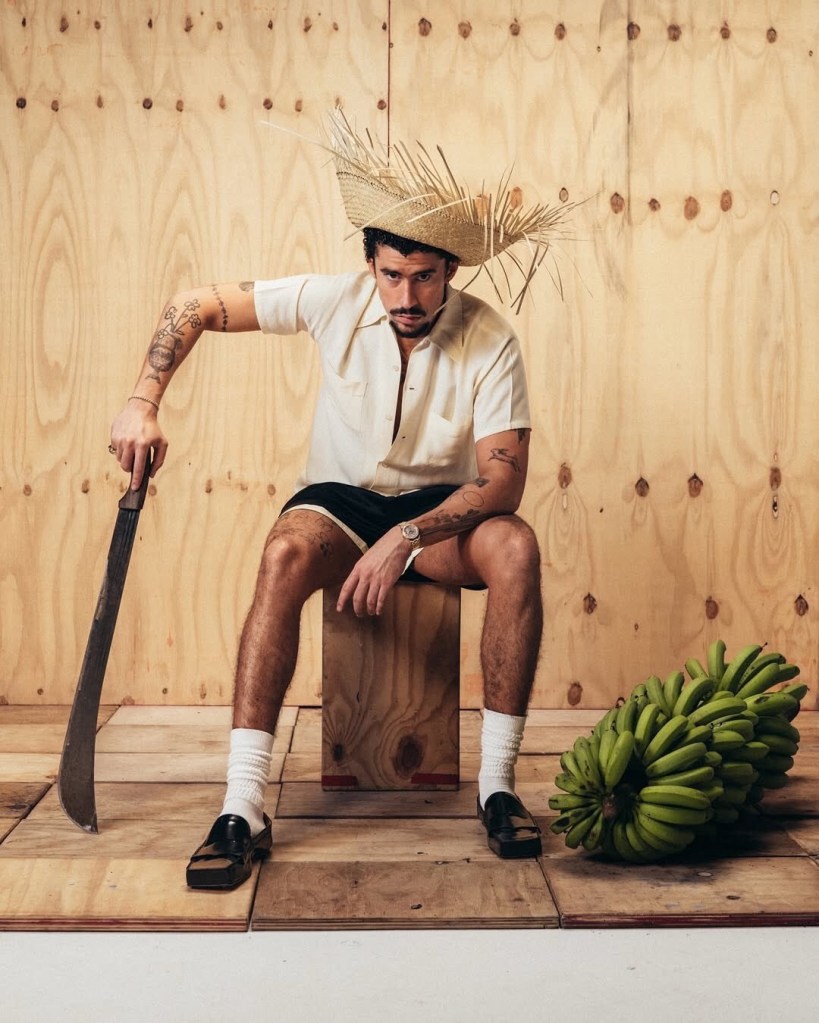
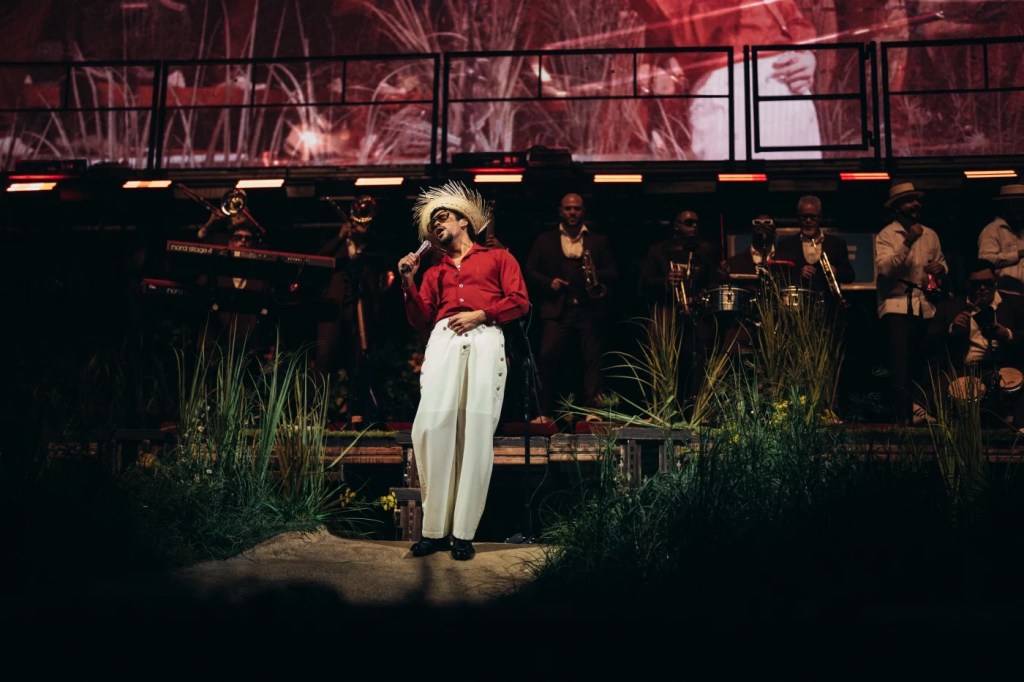
On February 8, 2026, Benito Antonio Martínez Ocasio, known professionally as Bad Bunny, sang and danced for 124.4 yards across the length of a football field at Levi’s Stadium in Santa Clara, California, for his headlining Super Bowl LX halftime show. A week after winning three Grammy Awards—including the coveted Album of the Year for “Debí Tirar Más Fotos”—128.2 million screens across the United States tuned in to watch Benito express his love and pride for Puerto Rico on one of the largest stages in modern music history. A show so beautifully choreographed and directed, it’s already being contested by fans for an Emmy nomination.
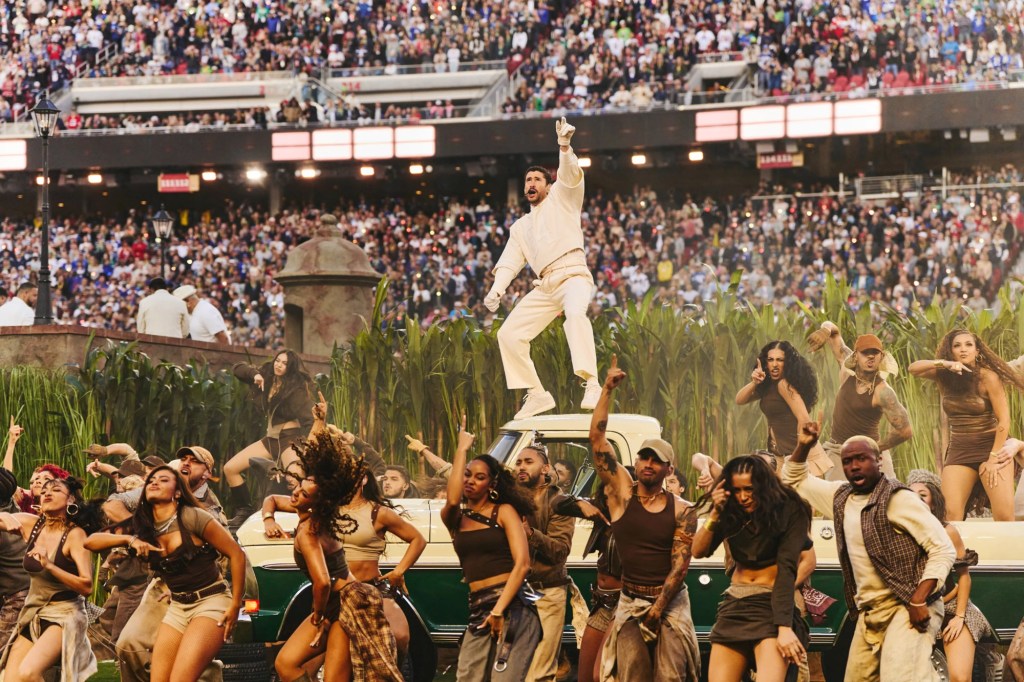
With special appearances from Lady Gaga and Ricky Martin, the 13-minute performance was lauded for its profound imagery of Latin American culture and history, both on and off the island. We see agricultural workers in pava hats walking the sugarcane plantations, power outages due to the US government’s disregard for a damaged electrical grid caused by natural disasters, a big fat wedding with a live salsa band, and a sleepy kid laid across three chairs in the corner of the dance floor. The show also gives us an insight into the vibrancy of the Puerto Rican community: coco frío carts, a game of dominoes, nail salons, piragua and taco stands, boxers, gold shops, a big pink casita, and not to forget, an EBT-accepting storefront.
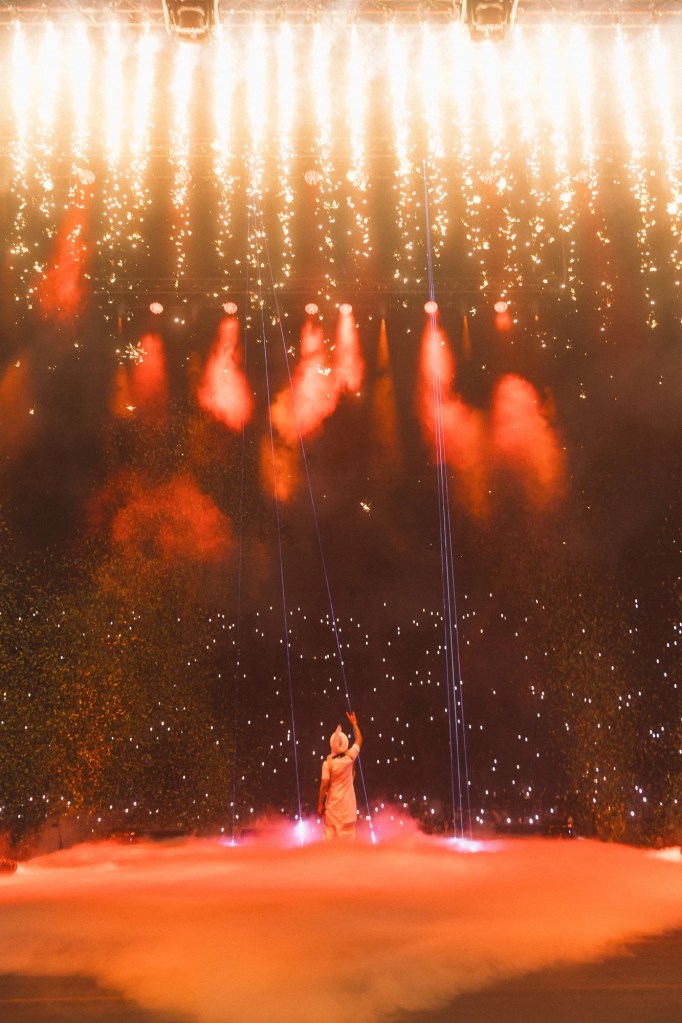
He ends his show by yelling the words “God Bless America” and immediately lists every country from South America to North America, ending with the United States and Canada. All while flag bearers gleefully run through the length of the set piece to Benito, proudly waving the flags of every country within the continental Americas. They stand behind him, unified as he holds up a football inscribed with the words “Together, we are America” and spikes it in the end zone. Declaring victory, he makes an emotional exit backed by a crowd of thousands sing-screaming “DtMF”. In the most turbulent of times in US politics, where brown people are being snatched away from their families, with no guarantee of a safe return, Bad Bunny chose to deliver a message with the same spirit that Beyoncé and Kendrick Lamar embodied on that very stage: the plights of our communities of colour need addressing, and we will interrupt your precious game—with love—to do so.
X, formerly Twitter, broke for the first few minutes immediately after the halftime show ended. Videos of packed bars, pubs, social clubs, and house parties all over the continent flooded the app, showing seas of people erupting over Bad Bunny’s electric concert. The first solo Latino headliner singing entirely in Spanish at the Super Bowl resonates beyond compare because his presence became a statement about belonging and cultural pride. It makes sense that brown people everywhere engaged in conversations around the commonality with some of the cultural identifiers in pan-Latin and Caribbean American life. I would also love to see someone that looks like me to represent our culture on a stage that big too!
So let’s imagine a South Asian-inspired Bad Bunny halftime show. Instead of “NEUVAYoL”, we get someone screaming “SOUTHaLL”! We’ll keep the plastic chairs, the gold shops, and the kid sleeping at the wedding, but we’ll add an off-licence run by a Sri Lankan bossman, a Pani Puri/Golgappa stand by a Nepalese uncle, and a square table of Bengali dadus playing carom or playing cards. Add a jhoola in front of the casita and use jali brickwork to make one of the walls. Make the performer pass by an Afghanistani kebab shop owner, make the boxers Pakistani and Bhutanese, and of course, the dancers Punjabi. You’ve checked off every country—even the ones you forget are a part of South Asia. What is the message to our community and to the wider world?
Usher, Rihanna, and Shakira/JLo didn’t have an “agenda” for their performances. They leaned on their catalogues to do the heavy lifting because the popularity of their music spoke for itself. I’m not saying stages equivalent to a halftime show have to be used to “say something of substance,” but given the current political climate, more and more artists are using their celebrity to spotlight issues close to their hearts. Some call it performative, but speaking out on injustices when you have a loud enough voice can make a difference. Nina Simone’s words ring truer today than they ever have before: “An artist’s duty, as far as I’m concerned, is to reflect the times.”
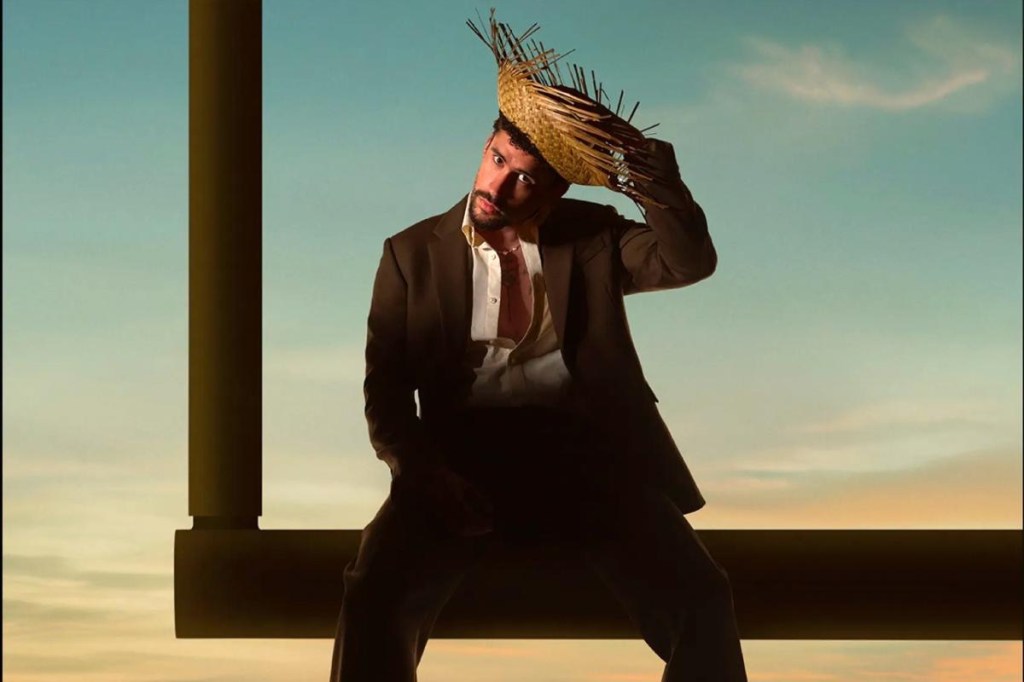
Bad Bunny captured the times of island life in clever ways for his performance, but it’s only made possible because he was inspired to have it complement his Grammy Award-winning album. Translated to I Should Have Taken More Photos, “Debí Tirar Más Fotos” talks about love, heartbreak, family, identity, and cultural pride, while commenting on socio-political struggles in Puerto Rico like sovereignty, gentrification, and a need for immediate, intentional preservation of its culture and heritage. Blending a wide range of traditional genres like plena, bomba, and salsa with contemporary reggaeton and hip-hop, the album offers up as a love letter to his home and the memories he has tied with it. A thematically cohesive and creatively confident body of work as strong as this comes only after six previous albums of compelling music. Ten years deep, he’s at a stage of his career where he can make an entire album out of bold ideas, and it pays off. He’s spent the past decade putting in the work to reshape the look, sound, and expectations of Latin pop, while exploring vulnerability in his lyrics and advocating for LGBTQ+ rights in his visuals and personal life. Fans that have been there from the beginning see themselves in his success because right before their eyes, Benito went from bagging groceries at a local Econo Supermarket to becoming the North Star for all Spanish-language musicians.
So given all this context and subtext, the question remains, who would be our “South Asian Bad Bunny”? From a global popularity standpoint, you’ve got Punjabi pop superstar Diljit Dosanjh. With a career two decades strong and a fan base to prove it, Dosanjh continues to pave the way with a trailblazing Coachella performance, sold-out stadium tours worldwide, and an award-winning acting career. He’s put his hard-earned fame on the line multiple times to promote the idea of wanting love, equality, and unity for all our people—telling audiences that political borders are mere constructs and the people love him for it. There’s a reason he just broke Live Nation’s record for the largest North American pre-sale by a South Asian artist with over 130,000 tickets sold in two days. We see in him a version of an ideal world we didn’t know we needed… but I need to hear that in his music. Where is the album that explicitly explores the identity of Punjab and its border history, politics, and culture in a modern context? Which magnum opus of his can we point to and say, ‘that changed everything’—where every song resonated? Maybe he’s just not that artist (yet), but if not, who is?
From a diaspora lens, Hanumankind definitely caught the attention of those both at home and abroad. His music videos are always spotlighting underrepresented communities and their stories in India. He even brought out a Chenda melam ensemble to Coachella. However, he’s only just released his debut album; a performance of this hypothetical magnitude would require more experience and a portfolio of proven crossover hits. Similarly, despite great work, I’d have reservations about rapper-producer NAV. While I commend the work he’s done to represent South Asian artists in the modern hip-hop space, nothing in his work spoke to South Asian culture until the Daytona Remix with Karan Aujla and Ikky—not that it should have to. Although he could bring out some solid guest stars.
We can’t forget about our film industry heroes—at the time of writing, Arijit Singh is currently the most followed artist on Spotify with over 170 million followers, beating Taylor Swift by a massive 20 million. Composing maestros A. R. Rahman and Pritam come in at #13 and #16 respectively. While her placement is further down the list, Sunidhi Chauhan revolutionised live performing for Bollywood playback artists, breaking the mould with high-energy solo shows and performing a catalogue that most artists would kill to have. Entertainment value could be high, with potential for some fun crossover guests like Ed Sheeran, Pussycat Dolls, and some A-list actors bursting out in iconic choreography, but iconic for whom? Outside of a majority South Asian audience, would the world care for a medley of film songs? No.
At the end of the day, this conversation won’t end with any one artist and their discography. We have to step back and acknowledge the larger picture. Despite national rivalries, regional differences, and the odd joke made between countries, there are strong bonds across Latin America and the wider diaspora. Many people actively connect across borders through music, food, sports, and other shared histories. South Asians don’t slack here—we have interwoven histories, linguistic ties, cuisine, and cultural practices that go back millennia. Shared diaspora identities, particularly across Europe, North America, and the Middle East over the past century makes it easier to remind ourselves of our deep roots with our motherlands. However, geopolitical tensions—especially between countries like India and Pakistan as an example—still heavily influence how people perceive one another. Decades of conflict, national narratives, and political rivalry that stem from the British Raj era contribute to less consistent solidarity across borders than you might find within many parts of Latin America.
While cultural bonds like music, film and food exist, it’s just not enough. Politically-driven news media tend to overshadow these efforts. We all enjoy films like East is East and TV shows like Late Bloomer but how often do we dismiss entertainment that doesn’t perfectly match our values, religions or aesthetics in real life? The rise of nationalist cinema also doesn’t help when Dhurandhar becomes the second highest grossing film in Bollywood history. Ironic that controversially divisive films are guaranteed money makers but the last truly unifying figures I can recall, beloved across generations were Punjabi Muslims by the names of Mohammed Rafi and Nusrat Fateh Ali Khan. This kind of an environment can make widespread public celebration of another country’s cultural icon almost absent in mainstream conversations, even if many people deeply respect each other’s artists and heritage. Just look at what happened to Fawad Khan.
It can’t be all doom and gloom, right? You might be asking, “Well, what would it take?” Becoming a “South Asian Bad Bunny” wouldn’t just mean another brown artist blowing up globally. It would require someone to culturally resonate across borders, influence the global perception of the modern South Asian identity, to stand up for a cause and then be artistically capable of creating a truly unifying moment that feels as emotionally significant as this Super Bowl performance did for Latin people. It takes an insane amount of guts to throw away a potential gross of hundreds of millions of dollars in tour money for your album in the name of protecting your fan base from ICE agents. What South Asian artist could take a principled stance like that today?
Though they haven’t yet achieved the mainstream success of reggaeton or even K-pop, South Asian artists are making global waves. Songs and artists from the continent or of its descent have won Oscar and Grammy awards, gone viral on social media multiple times, and appeared on major international stages and playlists—proof the audience is growing. We’re heading in the right direction. I like to believe South Asian music is currently in its renaissance era. We have incredibly diverse and super talented musicians in the game right now and I’m excited to see how far their talents take them but talent is never enough. By nurturing their growth through local chart tracking, global radio promotion, authentic cross-market collaborations, genuine industry backing, brown-owned media companies and leveraging powerful crossover platforms, the breakthrough of a singular figure with the cultural ubiquity and symbolism of a “South Asian Bad Bunny” is not only plausible but inevitable. It won’t be immediate, but I choose to focus on the journey, instead of trying to rush to any destination.
We think we want to go to the Super Bowl but what if the goal post is somewhere else? Why must we go where Black and Latin music dominate purely because we want to reap the same benefits as those we aspire to be like? We should strive to emulate an effect instead of imitate an action. Stages built for an IPL or ICC Cricket World Cup might be more impactful than what the NFL, NBA and FIFA can offer us. Truth is, no matter where it’s performed, music has the power to make real change beyond what we remember. Songs can actively help shift pop culture and create or soundtrack public awareness and policy. Stevie Wonder’s Happy Birthday, Public Enemy’s Fight the Power and The Beatle’s Within You Without You—all evidence that our world would be different had they not existed. As humans, we can only seem to grasp the gravity of life’s moments in hindsight. We can’t perceive them for what they truly are at the time. With this in mind, I eagerly wait for the day we celebrate art that uplifts our culture and brings positive change to the world—if we’re ever brave enough to create it.
To paraphrase the opening line of the halftime show, “Qué rico es ser South Asian.”
 JAY DAHYA