
Growing up in the uber-populated Indian area of Belgrave, Leicester, was a blessing. From a very young age, I was instilled with an understanding of the importance of my Gujarati heritage. I was surrounded by various cultural markers, including festivals and neighbourhood gatherings, adapting mannerisms and sensibilities that I could only attribute to this community. I’ve always been fascinated by how people from different countries can create a sense of home away from home wherever they find themselves in the Western world. Think Jackson Heights in Queens, New York, or even Brampton, Ontario, Canada.
I always knew I wasn’t alone in having a ‘Belgrave Rd-type’ home. Nearly every major UK city has its own: Soho Road in Birmingham, Wilmslow Road in Manchester, White Abbey Road in Bradford, and so on. London has multiple: Wembley has Ealing Road, Whitechapel has Brick Lane and, of course, Southall has The Broadway/South Road and Guru Nanak Road, which was renamed from Havelock Road, named after Major General Sir Henry Havelock—a British officer involved in colonial campaigns like the Indian Rebellion of 1857.
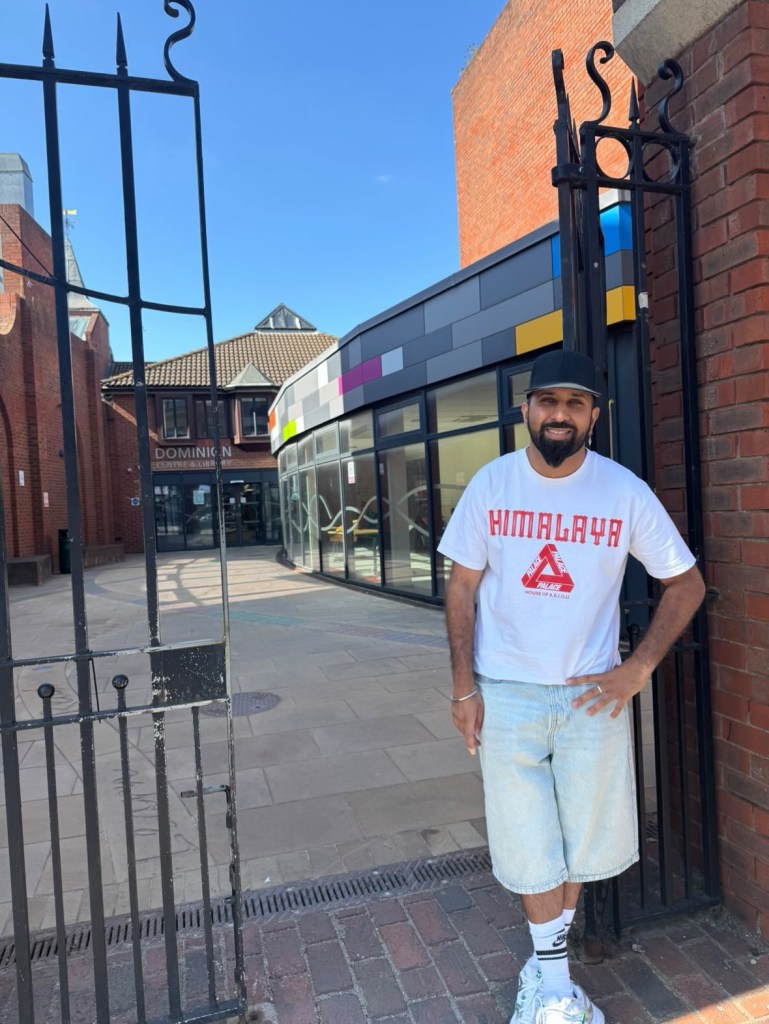
The time came for me to finally visit the mothership that is Southall. And for good reason too. The Southall Library and Dominion Centre hosted the Daydreamers Festival—a free full-day event, spotlighting the creative talents and rich socio-political histories of this diverse town for anybody who wandered through their gates. A day of music, film, dance, art showcases, panel discussions, bookshops, workshops and educational activities, all for free. How could you pass that up? The brainchild of this festival is none other than Manu Nandha—Creative Director, Curation and Programming for the Dominion Centre. Widely known as the face behind the creative lifestyle brand and platform House of A.E.I.O.U., Nandha’s ethos behind the music events and panel discussions he curates is to shine a spotlight on the diverse creative talents within his community, namely Southall. Before attending the event, I had to explore the area for myself to get a feel for the town. I only knew as much about it as I had learned through the lens of the British South Asian culture, from artists like Jay Sean and Gurinder Chadha to contemporary creatives like Hark1karan and Sharan Dhaliwal.
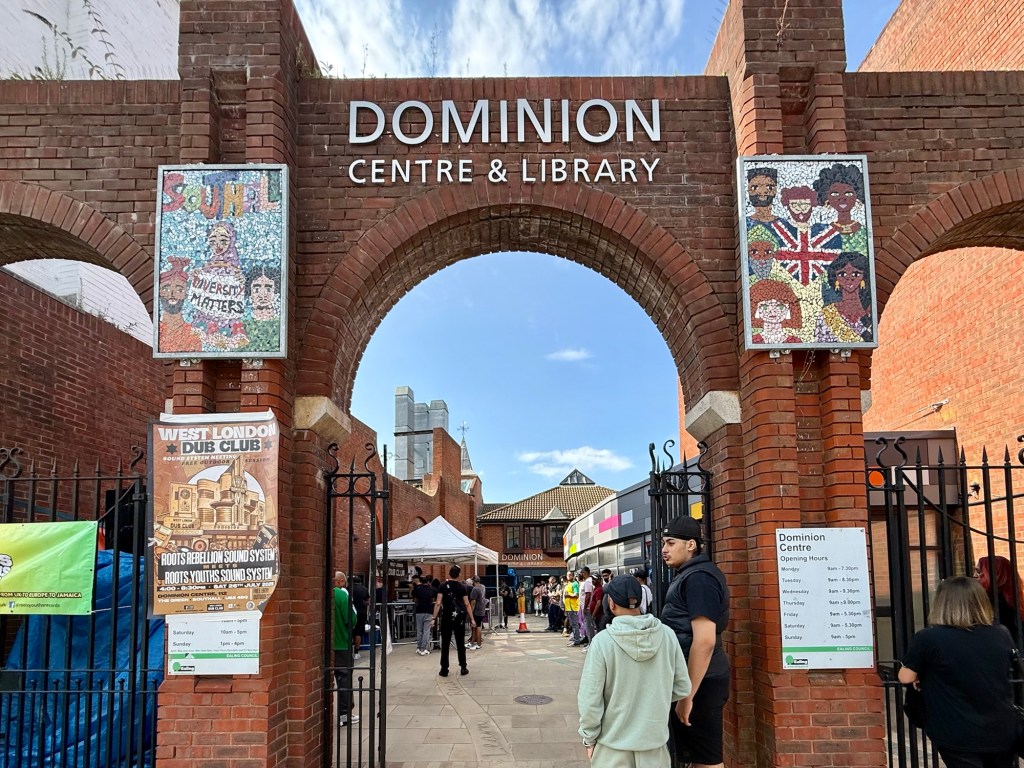
I saw the Panjabi community before I pulled up to the station on the Elizabeth line when I looked out the window and saw the Gurdwara Sri Guru Singh Sabha. I saw people flocking towards the entrance while carrying boxes of flower pins to attend an Anand Karaj. I (somehow) saw brown TfL staff for the first time ever, and adverts for saree shops at the entrance of the station. As I walked around the area, I took in the many sounds of Southall: the muffled echoes of AM radio, in supermarkets with the same cracked concrete floor as every other desi wholesaler. The grunts of someone’s bibi sitting down at the Park Avenue bus stop after carrying a heavy load of sabji shopping. I took in the many sights of Southall Broadway: I saw police cars blaring sirens at 10:30 am as they sped past school-aged kids, outside the Palace Shopping Centre, carrying boxes of honey mango to the storefront of their parent-run shop. I saw an uncle sitting stoically, scanning through the crowds at his outdoor market stall, waiting for someone to buy a £2 pack of white vests. I even saw the Southall Active Communities Team host at least 15 people outside a local park to begin a biking event.
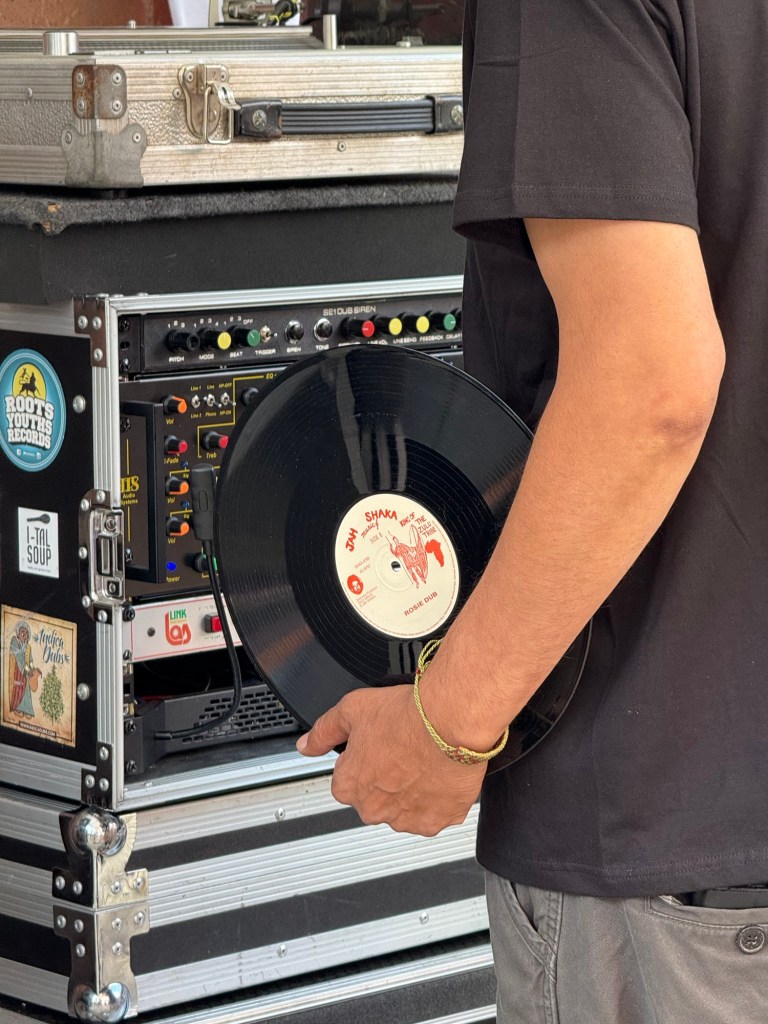
Aside from the wider roads, Southall felt strikingly familiar—like Belgrave or Highfields back home but it had a rhythm of its own. The people in this community stood out as the thing that sets this town apart from all the rest. For example, upon arriving at the Southall Library and Dominion Centre at 11:00 am on a sunny Saturday, the main theatre already saw multiple families with children attend a screening of Disney’s Encanto. As the day progressed, the incredibly loud and groovy bass coming from West London Dub Club’s towering speakers pulled people in off the street in droves. After having spoken to a few locals, this seems like the norm here. Or at least, a welcome peek into the heydays of the area. Dee from Panjabi Hit Squad mentioned the same thing in their vinyl talk session—PA speakers and BMWs alike blared Panjabi folk, reggae and Urban Asian music of the 2000s all down Southall Broadway and the air was electric because of it.
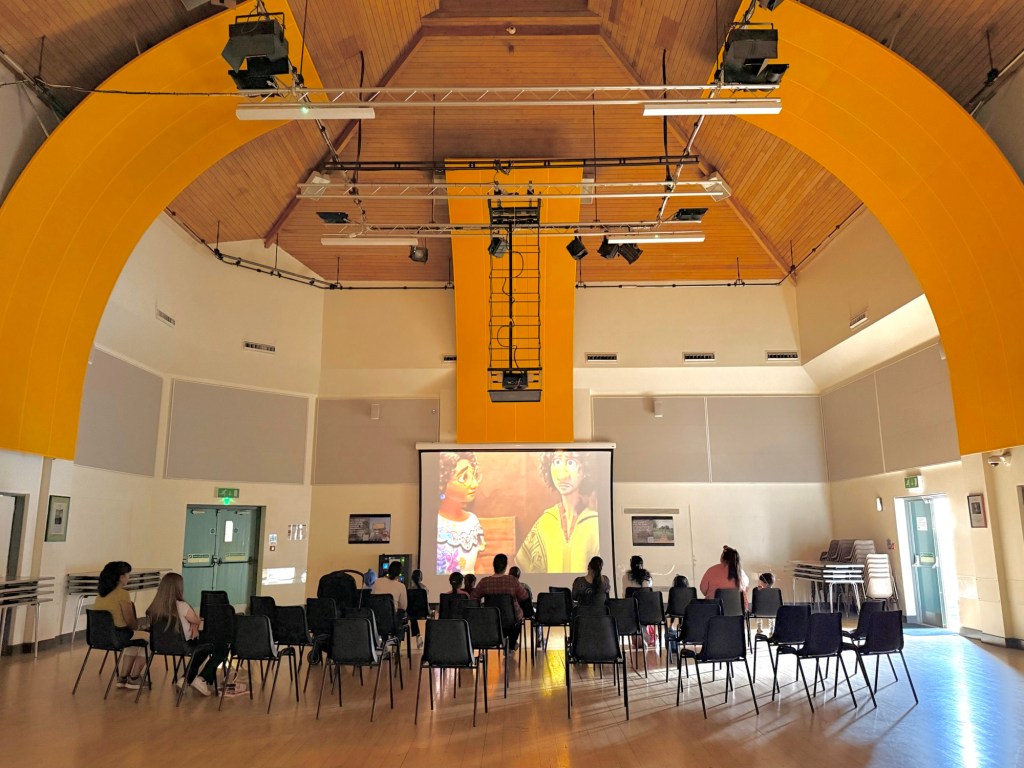


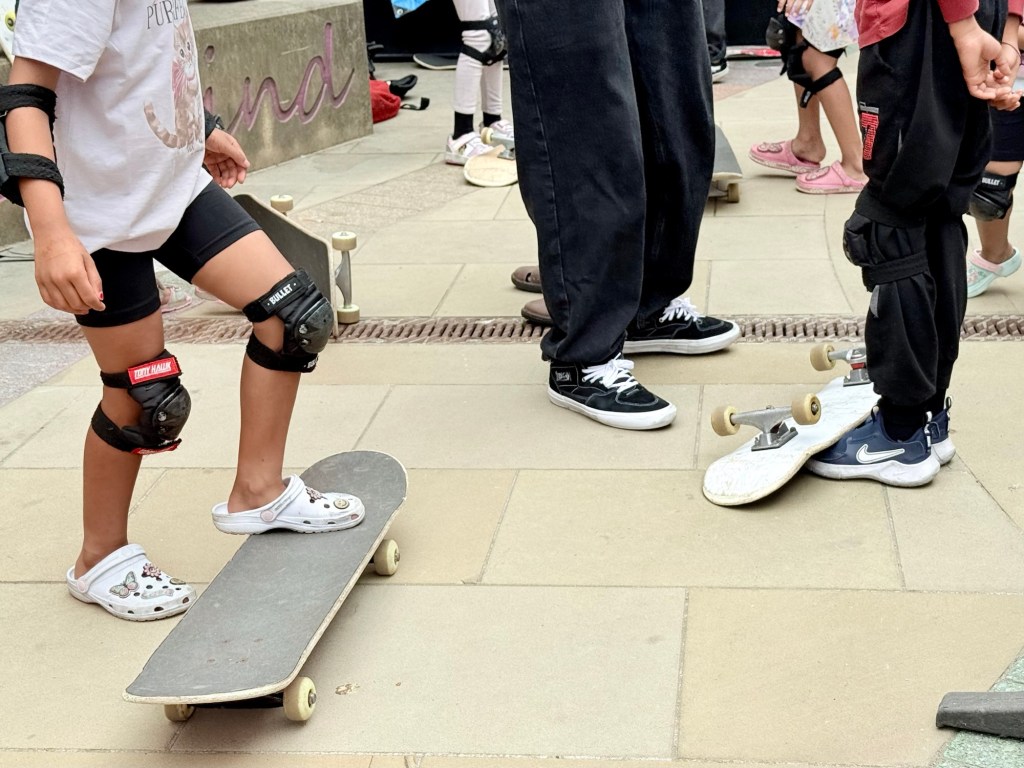
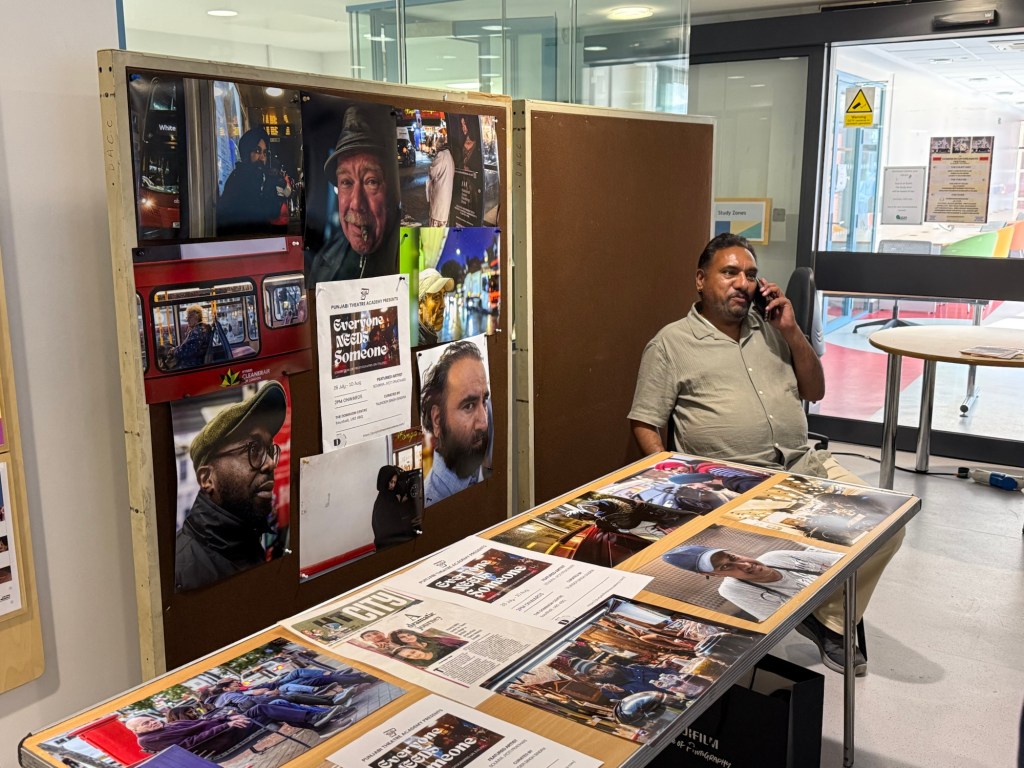
Let’s talk about it—the Dominion Daydreamers Festival was a hit. If you weren’t there, Nandha and his team at the Dominion Centre built what I hope will be a regular event in the coming years. Throughout the day, the locals engaged in multiple organised events that spanned interests across generations and audiences. Other than watching Encanto, neighbourhood kids were taught beginner skateboard lessons with Learn to Skateboard UK, stalls for tuition programs with Boost Education, and colouring activities with Gunnersbury Park Museum. Young creatives enjoyed podcaster Raj Pander’s panel discussion around how independent creators can build their own seat at their own table, talking to the masterminds behind the DominAsian Magazine at their stall, art projects from students of Villiers High School, and understanding how to get involved in the performing arts with Panjabi Theatre Academy, who exhibited some of their recent works. The older crowd enjoyed the opportunity to support the Southall Black Sisters as they screened the 1986 documentary film, ‘A Fearful Silence’, followed by a Q&A with activists, an incredible kathak performance by Priya Pawar, and a pop-up exhibition exploring Southall’s heritage with Gunnersbury Park Museum and Dr Jonathan Oates. Of course, everybody enjoyed food from Southall’s favourite Poornima’s and all the incredible music from Rebels & Pilgrims, West London Dub Club, DJ Kullar / Roots Youths Records, and Roots Rebellion Music, a touring multicultural bookshop from Book Love, as well as a special screening of Gurinder Chadha’s directorial debut Bhaji on the Beach.
One of my favourite conversations of the day was with photographer Jai Toor, whose archival piece was being showcased in the foyer of the Dominion Centre. His ongoing project “Visiting a Thorn” explores the lived experiences of South Asian communities in 1950s-1970s East Africa, before the expulsion of Ugandan Indians by former President Idi Amin, through interviews, images and salvaged documents. It’s a remarkable piece of photojournalism whereby Toor aims to “present a narrative free from colonial distortions.” Black and white photographs—alongside a few deteriorating negatives—were carefully selected, preserved and scanned to reconstruct pieces of history tied to colonial Africa, from a variety of sources, including his personal family albums, away from the white settler lens of the British reign. Listening to him speak about his grandfather’s journey to Britain from Africa, as well as other stories shared with him over the years, was a bittersweet experience for me. Being my family’s self-appointed archivist, it’s always been upsetting to know my paternal family have no photographic memories or other mementos of their time in Kenya before emigrating to the UK. I also felt such joy that so many families had the one thing that I wished for my own: concrete evidence of a happy life in East Africa. Toor’s project is more than just a trip down memory lane; it’s a way to uncover the everyday lives of the generations before ours. Maybe it could help future ones stay connected to parts of their lineage for generations to come.



It’s conversations and cultural exchanges like this that keep people connected with each other in their own neighbourhoods. As the day came to a close, what stayed with me most was the sense of genuine community here—hundreds of people of all ages showed up and took part in celebrating the histories, the sounds and sights of Southall together. The Dominion Daydreamers Festival wasn’t just a throwaway event, it was a reminder of what happens when creativity is rooted in the local. We often think of festivals as these massive productions in fields and parks that go as far as the eyes can see, but it’s in these smaller, resident-led gatherings—in places like the Southall Library and Dominion Centre and executed by people like Manu—that nourish long-term and consistent engagement. They offer space not just to create and experience art, but to imagine futures through it. Seeing big, neighbourly talents like Panjabi Hit Squad and Raj Pander inspire younger generations to seek opportunities that explore the arts close to home is huge. It opens doors, not just for their own creative growth but for vital conversations in households where artistic careers aren’t always seen as viable.
We need more of this: more access, more visibility, more outreach, and more belief in what our communities can create and how they can uplift those around them when given the chance. If we’re serious about cultivating community, we have to go to where the people already are, or where they deserve to be. That means funding schools and cultural hubs, supporting local libraries, and hosting free programmes and pop-up events in the spaces that are often overlooked. You can fake interest online, but you can’t fake genuine participation. To make that happen, we need more people like Manu Nandha and more belief in what our communities can build when given the chance.
I DM’d him shortly after my visit to ask more about his journey in community outreach work, the Daydreamers Festival, and what it means to be a leader in your local community.
Your work in community outreach and in creative spaces throughout Southall clearly comes from a deep sense of purpose. What first drew you to this kind of work, and how has your purpose evolved over time?
Manu: Community and creativity have just sort of been around me for as long as I can remember. I think that’s why it feels so natural and true to my vision and reality. Living in the heart of Southall, my house was always filled with friends and family. As chaotic as it may have been sometimes, I constantly saw the beauty of conversation, dance, music, and connected energy through this environment my parents cultivated.
My Dad, born and raised in Punjab, had to figure out how to build something of his own in the UK, alongside his brother. They bought a shop and from that, built a community. People didn’t just come to the shop to buy groceries, they came for my Dad; it’s a special thing. Almost like how people didn’t just visit the studio I launched a few years ago for books, art, my garms or the creative spaces we curated, they came for a chat—a sense of connection, belonging and freedom. Just like the old days at my house. My Mum’s a designer at heart. Dad often worked 14-hour days, seven days a week, and in that time, she would take me shopping at different textile stores around Southall. She knew everyone and everyone knew her! They’d say, “Oh, you’re Rani’s son!” It was embarrassing when I was younger, but now as I shop in those same stores, searching for fabric to create my latest shirt designs, it brings me a great sense of pride and connection to my community to think about how those moments with my Mum have had such a lasting impact. The House of A.E.I.O.U in its studio form, and even now without the studio, was always built on the foundations of my own home.
I’ve taken a strategic step back and created platforms and opportunities for other creatives to create conversations and communities. My career has taken me from my physical art studio in Southall to working with Gunnersbury Park Museum and the Dominion Centre, and more recently, I’ve been appointed Creative Lead on Southall’s first public art project. These roles both celebrate and engage with my heritage through creativity. I want creativity to exist without walls and in intangible moments; I strive to create an energy and a feeling, rather than focus on the tangible.
The Daydreamers Festival was such an incredibly layered, intergenerational experience. What did you hope to achieve with the event and what does success look like for your team beyond a great turnout?
Manu: I think we had over 200 people come through, which is not bad for a Saturday in a community centre. Even if only two people came through and had a meaningful moment, that to me is just as powerful as all 200 people bouncing off each other. That’s success—just doing it, giving it a go and seeing what happens. No metrics, no dashboards, no surveys. Just the beauty of letting things be. While the first priority is creating that space, I’m not sitting there planning every detail, ticking boxes—it’s quite the opposite! It’s more of a feeling thing and I guess, that feeling delivers the experience you had.
It’s a great thing seeing people from different backgrounds and with different interests all be in the same place. If someone sees or hears something that triggers even the slightest interest in a space they hadn’t cared about before, that’s an exciting thing! Celebrating how different we are is a beautiful ting. Take me, I’m from Southall and I spent my teens jamming out to Coltrane and Slipknot. No one around me got it, but does that mean I can’t have a meaningful interaction with someone who doesn’t like that music at all? Maybe that’s a more exciting interaction—talking to someone who on the surface seems like they’re nothing like you at all.
Creativity and community almost depend on each other and should always co-exist. It’s great when big brands and institutions champion the global majority stories but what’s more important is those same people creating proper tools, pathways and accessibility outside of their direct reach. They need to be present in your local estates, libraries and town centres, and if they aren’t, that’s cool too. That’s a responsibility I think artists have, which is to bring these conversations into their spaces. 9pm on a Monday night at Soho House is great but what about 3pm on a Sunday in your local library? Who are we really trying to reach and how do we reach them? Making actual change in your own ends—that’s success to me but defining success is complex as a creative. I think the art of imagination is more exciting than actually delivering the project. Always striving to exist and flourish without walls—that’s my abstract perspective on it.
Part of what made the event so powerful was how it opened up conversations around the arts, heritage and viable career paths, especially for younger South Asians. Was that a conscious goal and if so, how do you approach changing those narratives within the community, in the position you hold at the Dominion Centre?
Manu: The thing is—and its a strange one—you can sometimes feel lost, or feel this lack of belonging, or maybe just the anxiety of having to conform to being in perceived representative spaces. I certainly still have those moments but I am cool with it. I tend to follow my instinct and that normally leads me to a good positive space, with like minded people. I’m never consciously trying to create a space for a specific community, or demographic, or type of person. I’m attracted to artists and their stories, as well as the stories of those around this creative space.
The Dominion Centre has a beautiful heritage and an exciting future but I do take it one day at a time. The harsh reality is that there is a very temporary feel to the space sometimes but I like the excitement of not knowing what the next day holds. It’s where the creative really comes from; that unknown and the fear of what might happen to this space in the next few years. I won’t let it disappear without a fight but I am aware of the reality of community centres. I’ve grown up seeing all the iconic places in my ends either be destroyed for flats or left to just disintegrate quietly in the background. With such a strong heritage, of course we deserve better but doesn’t all of society, don’t all creatives simply deserve… better? You have to be optimistic though. There’s so much more to Southall than the Broadway; people can learn a lot about our ends just by turning left at the station. You have to know it in its entirety to really connect to its beauty—something that I am committed to doing. I’m drawn to real life and feel a great sense of purpose when I wake up and walk to places like the Dominion Centre. There’s something powerful happening here and no doubt, will continue to create a powerful legacy.
What do you think the future of grassroots cultural programming looks like and what support does it need to thrive?
Manu: The future, I think, is in the word ‘grassroots’. There is something beautiful and powerful about the grounding experience you create by activating spaces that are close to the roots of the community. That’s the future right there. The solution might not be in creating more spaces but rather more consciousness in curating spaces in the places the global majority live, work, and play. Working with brands that want to be part of the conversation and ensuring they give back to the space, involving proper outreach programmes, career paths, and ways for people in those communities to build sustainable futures in creative spaces. Rather than one-off community-driven campaigns that leave no long-term legacy for the very people who form the campaign identity. Co-curation but on our terms. Grassroots is special because in its purest form, it exist without permission. It needs to be rebellious. It needs to be raw. It needs to go against the rules. It makes its own rules. If it starts conforming. It’s lost its very purpose of why it existed in the first place. That how it thrives, that’s how it exists. Well, that’s how I think about it anyway.
 JAY DAHYA