
From the outset, I knew the DAYTIMERS were different. Before the collective existed, South Asian presence in the UK’s club scene felt scattered and under-recognised. A handful of DJs and artists made joyful noise but authentic visibility was rare, often limited to token bookings or the occasional nostalgic “desi night.” Brown ravers either clocked each other across the room and ran to dance alongside them or kept their distance, wary of seeming too ethnic in spaces built for white, Western tastes, that shunned the hypnotic diasporic sounds of the Black and Brown experience. Despite living in one of the most multicultural countries in the world, our sounds, our languages, textures and rhythms rarely found a home on mainstream dance floors.
However, something about being caged within the confines of our homes during the pandemic shifted things for us, culturally. Suddenly, language wasn’t a barrier to how we consumed music or film; we all just wanted to feel something again, together. People built online communities to share grief and discover art simultaneously. Collectives like the London-based DAYTIMERS used these online spaces, not only to reclaim dance floors where they had been discriminated against but also to rally political change. This came at a moment when the world was growing restless to address social injustices. They evolved from community radio shows and charitable livestreams to sold-out club nights, iconic Boiler Room sets, and a bold presence in spaces, even outside of music, that long overlooked South Asian influence. By championing and creating a worldwide network of South Asian creatives, hosting incredible club nights, and throwing inclusive, identity-centred events for cross-generational audiences, the DAYTIMERS helped reshape the wider club ecosystem into something far more representative and future-facing.
Their latest project aims to leave a legacy beyond their wildest dreams—Alterations feels like both a love letter and a radical statement to tell the world that the South Asian sound and artistry is not to be ignored. The DAYTIMERS have spent the past five years throwing clamorous parties of their own, with resident DJs like Rohan Rakhit and Mahnoor mixing everything from film soundtracks and folk vocals with hip-hop, dubstep, grime, and jungle for a new generation born and raised in the UK, further removed from the root connection of their ancestral home. They follow in the footsteps of their Asian Underground predecessors: Nitin Sawhney, Talvin Singh, DJ Ritu and Shabs Jobanputra, who encapsulated the sounds of a scene that meshed Asian music of the time with 90s British electronica on a 70-minute CD.
While albums like these aren’t produced as widely anymore, the DAYTIMERS are no stranger to this type of work. Outside of Dhruva Balram and The Jazz Diaries’ one-time collaboration on “Chalo” back in 2020, the collective is one of the only sources of well-curated works like these that celebrate the diaspora’s underground artists. Their latest compilation boldly remixes Bollywood and regional Indian nostalgia with the forward thrust of global club culture, via unprecedented access to Sony Music India’s back catalogue, with full creative licence to revise treasured recordings, beloved by billions of brown people around the world. Across ten reimagined classics—some more recent than others—each producer pulls off the impossible and reshapes familiar melodies into a rave-ready soundtrack. The album’s sequencing mirrors the evolution of the South Asian club night from the days of Anokha, Bombay Bronx and Shaanti. With different tempos, genres, and moods throughout the project, it begins slowly, building tension and blending Asian flavours until it reaches a 160 BPM climax at 4 a.m. Just as the house lights come on and you’re shown out by the bouncers, the album ends.

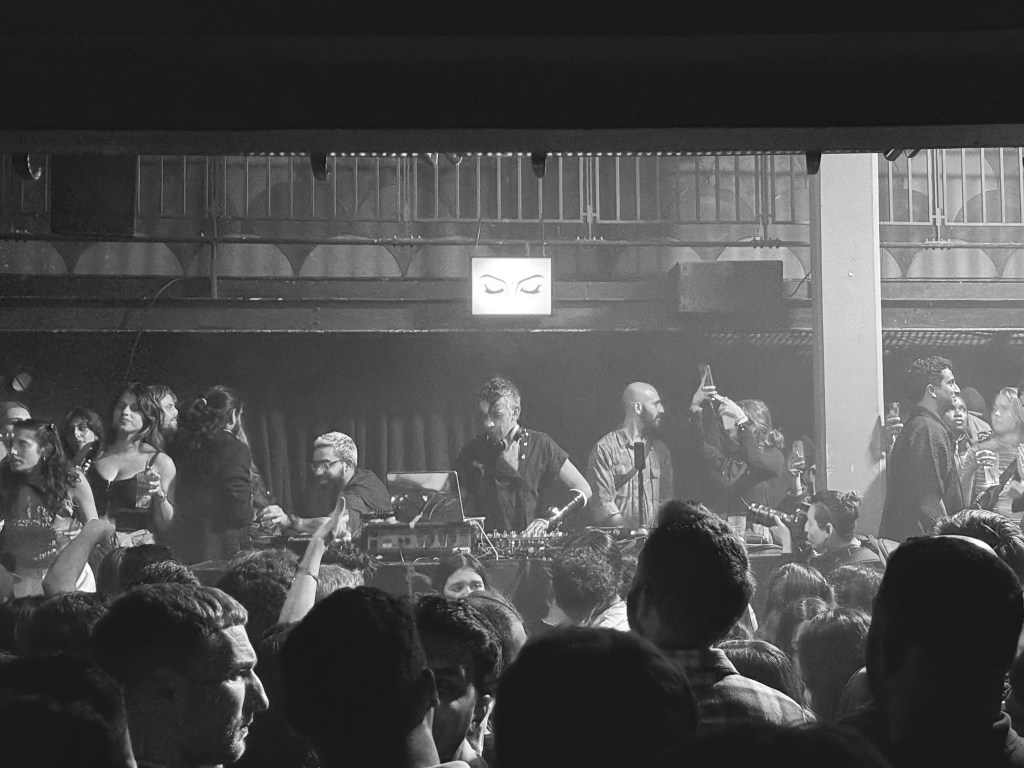
Works of Intent, Chandé and Mahnoor at the Relentless Showcase in January 2025, previewing Alterations 
Works of Intent, Chandé and Mahnoor at the Relentless Showcase in January 2025, previewing Alterations 
Works of Intent, Chandé and Provhat Rahman at the Relentless Showcase in January 2025, previewing Alterations
We start off with KHAYAAL—a modern classic by rising stars Talwiinder & NDS. The original song hears him wax poetic about being completely devoted to the one you love, and the remix effortlessly carries that same weight with its darker, more grungy take on the Panjabi-language Pop/R&B song. I can see myself and a crowd full of people walking down the stairs to a sweaty underground club room, as the DJ begins their warm-up set with this song. Even outside of the club, it has huge replay value. K. Monday was able to keep the essential emotional intensity of the song, while reimagining it with breakbeat and an almost post-dubstep-style bass that hits the second the beat drops.
The party speeds up slightly with a remix of a Karan Johar classic, WHERE’S THE PARTY TONIGHT. Toronto-based producers, DJs and Maazar night mainstays Mrii and Zenjah turned everyone’s favourite singalong anthem into a modern and infectious two-step UK Garage roller. Some people may think the song deserved a more drastic revision, but they would be wrong. While the playful familiarity of the lyrics and that iconic, synthy-metallic motif—now chopped and re-pitched—does most of the heavy lifting here, Mrii and Zenjah knew they didn’t have to do much to transport you into the middle of the dance floor. Mrii spoke to Apple Music 1 Radio Presenter and host of Tala Radio, Naina Sethi, about how they decided on the sound, “We actually thought about taking it in so many different directions, whether it’s Amapiano, Jungle, even house, but UKG was the one that really hit!”. With a bouncy, club-ready remix like this, it’s sure to get you off that wall and join the dance.

Nadī performing at The Jazz Cafe for the DAYTIMERS Alterations Residency in April 2025 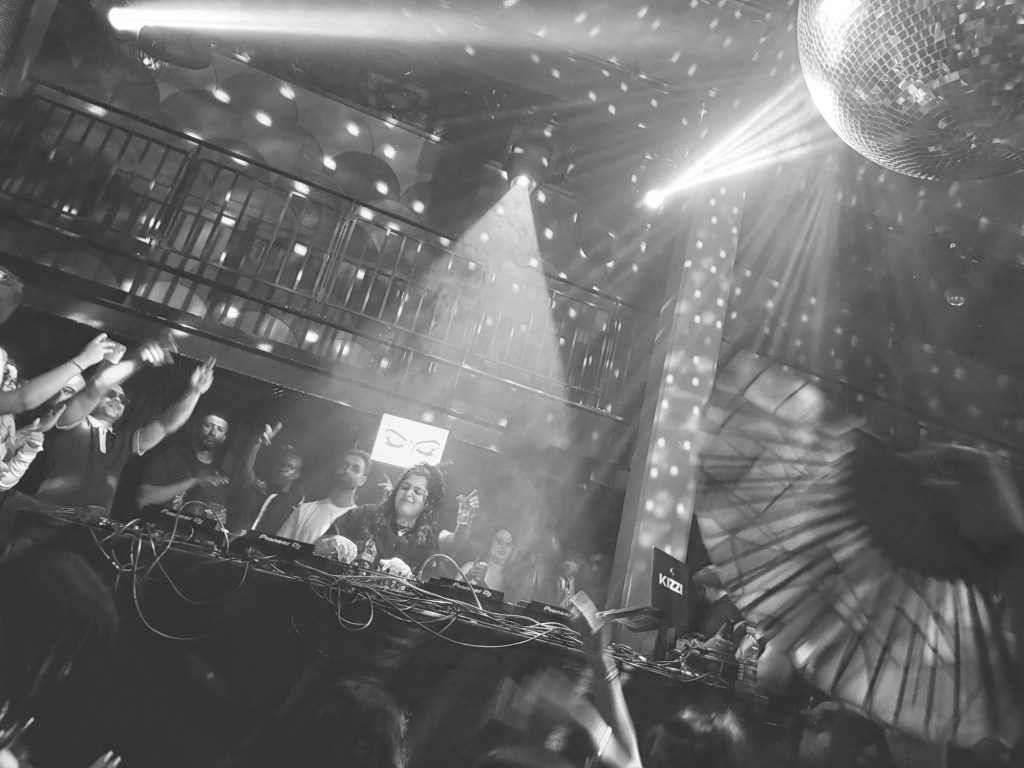
Kizzi performing at The Jazz Cafe for the DAYTIMERS Alterations Residency in April 2025 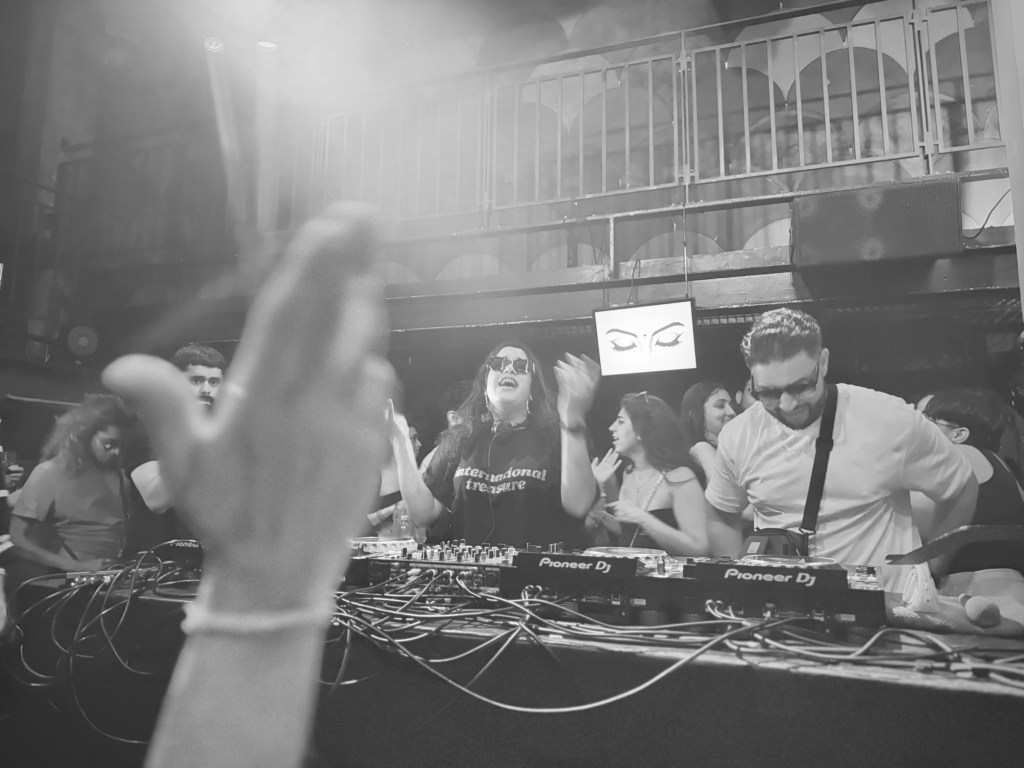
Manara performing at The Jazz Cafe for the DAYTIMERS Alterations Residency in April 2025 
Manara’s purse performing at The Jazz Cafe for the DAYTIMERS Alterations Residency in April 2025
The club starts getting warmer with this high-energy, intense remix of the Tamil-language film song VIKRAM, by German-Pakistani producer Zeeshan. While he doesn’t understand Tamil, he knew he wanted to flip the soundtrack and create a genre-bending jersey-garage, Afro-bass monster with it. A growling, wobbly bassline runs throughout the remix, with high-pitched strings and filtered vocal chops scattered on top and an Amapiano-esque swing on the bottom. Every minute of this remix has its own unique mood and club influence, finally trading urgency for atmospheric in its last minute with ambient synths and textures. An all-round, electrifying experimental global club track for the ages, Zeeshan remixed the hell out of this Anirudh Ravichander song. I could hear this going off in parties across a bass-heavy London, a percussion-obsessed Joburg and a fusion-loving Delhi.
We move to the first single off the album and the crown jewel of the project, TERE BINA—an A.R. Rahman classic from the 2006 Bollywood film Guru. Indian-born, New York-based duo and rising electronic sensation Baalti, thankfully and thoughtfully, didn’t just butcher a South Asian wedding staple by slapping on their trademarked monster drum programming. They, instead, built an ambient world around the butterflies-in-your-stomach feeling that you get when you enjoy the original. Carrying the sentiment of one of the most romantic songs to ever come out of Hindi cinema, Baalti’s appropriate reimagining sounds like falling in love upon first sight in the club. You lock eyes with a baddie in the crowd and you kinda stop jumping for a split second and smile from the corner of your mouth… if they stare at you any longer, you can’t leave the room without their number. Baalti’s cinematic UK Garage remix brings a heartfelt elegance to this two-stepping groove, as A.R. Rahman and Chinmayi Sripada’s voices echo in everlasting harmony.
If you grew up with the original from Guru in your pre-teens, that song carries huge emotional weight for you. It’s soaked in romantic yearning and a kind of timeless, dreamy sadness. Hearing the original production, in all its lushness, in your early years would’ve tied it to memories in front of the TV with your parents, watching the music video on B4U Music, as well as at family weddings and long car rides on the motorway. Maybe even early ideas of love and loyalty, as many Bollywood works of that time would’ve done. Add in electronic layers and a reworking for the ages, especially for diaspora listeners living outside of India, this new version could feel like a bridge between who they were then and who they are now. It’s not just a remix, it’s a reclaiming of their roots and an expansion of their identity into more global sounds. What very well could become a timeless remix, it provides a euphoric listening experience every time for those that really get it.

DAYTIMERS Alterations Residency in April 2025
DAYTIMERS co-architect Provhat Rahman dusts off an old remix from 2020 and hands it to Relentless Records on a silver platter with this next track. Originally a DT001 release, under an unassuming ‘DAYTIMERS’ moniker, Provhat’s “Anti Chill Pill Remix” of the forever iconic Kabhi Khushi Kabhie Gham’s SURAJ HUA MADDHAM is now officially a Sony Music India release. The remix rivals the original in length with an astounding six-minute running time of pure, unadulterated jungle madness—he successfully turned this romantic ballad into a dynamic, high-energy track that could set any dance floor ablaze. A beautiful nod to the Asian Underground raves of the 1990s, where the nights would end with an unhealthy serving of jungle and then later on drum and bass, this remix relies less on lyrical content and more on the bansuri and violin melodies. In true Y2K Bollywood fashion, Provhat let the instrumental interlude take charge and made it shine like never before.
We swiftly move on to the fun, energetic second single off the album, DIPPAM DAPPAM—a Baile Funk and UK Bass reworking of the soundtrack to Tollywood romcom Kaathuvaakula Rendu Kaadhal. Bristol-based DJ and producer Rea adds perfectly bright, celebratory horns, a thumping Afro-house-inspired bass and police sirens in the background because she knows this remix deserves to be played so loud, your neighbours will be calling the cops around 11 p.m. to shut your party down. This remix marks the point in the club night where you start to wipe beads of sweat off of your forehead.
If Rea’s remix made you sweat, Bristol-based DJ and producer Nadī makes you take that jacket off and turn on your handheld fan with her Jersey Club refix of Badshah and Payal Dev’s Hindi-pop track, GENDA PHOOL. Built around a chorus derived from the Bengali folk song “Boroloker Biti Lo” by Ratan Kahar, popularised in West Bengal and Bangladesh in the 1960s, the song tells the tale of people wanting to adorn the long hair of a rich man’s daughter with red marigolds. The remix commands an immediacy, an abandonment, and a carefree energy on the dance floor—words rarely said about a folk song. This festival-ready track has a raw, kinetic power that helps bring out your inner raver. If anybody includes this in their setlist this summer, just know they mean business.
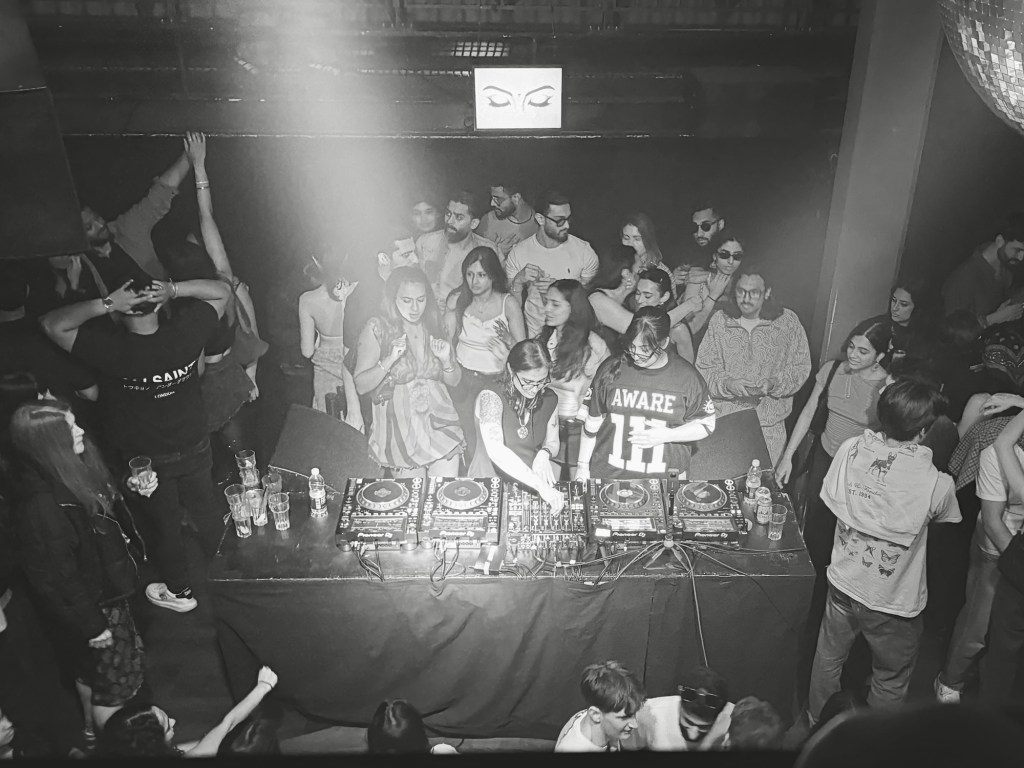
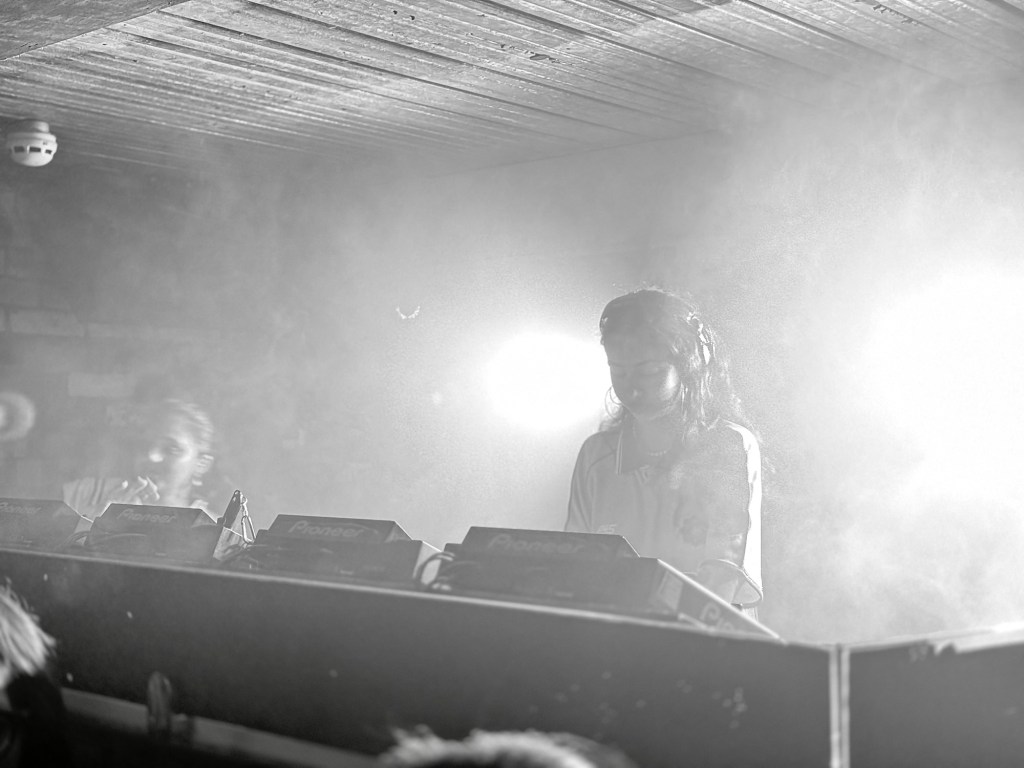
The vibes keep on coming with New York-based DJs and producers Krithi and Sana’s version of GHANA KASOOTA—a slightly experimental Baile Funk take on a Raftaar and Rashmeet Kaur Hindi-pop song. When field testing the song before its release, the newly announced founders of the new DAYTIMERS NYC chapter saw that it garnered a deservedly wild response wherever it played, from London to New York. A remix truly fit for the club climate of our times, this sexy, audacious track will have people shaking ass no matter where you play it. The Haryanvi lyrics in this vocal performance, paired with the underground Brazilian club texture of Baile Funk, are a match made in heaven. We need more of this!
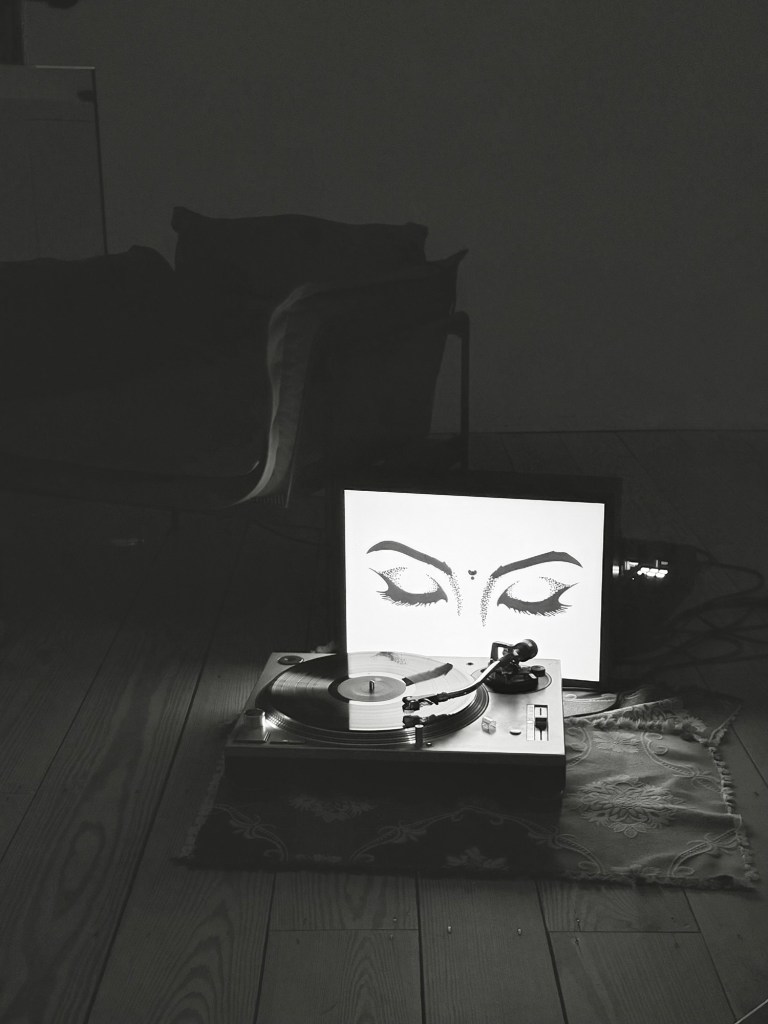
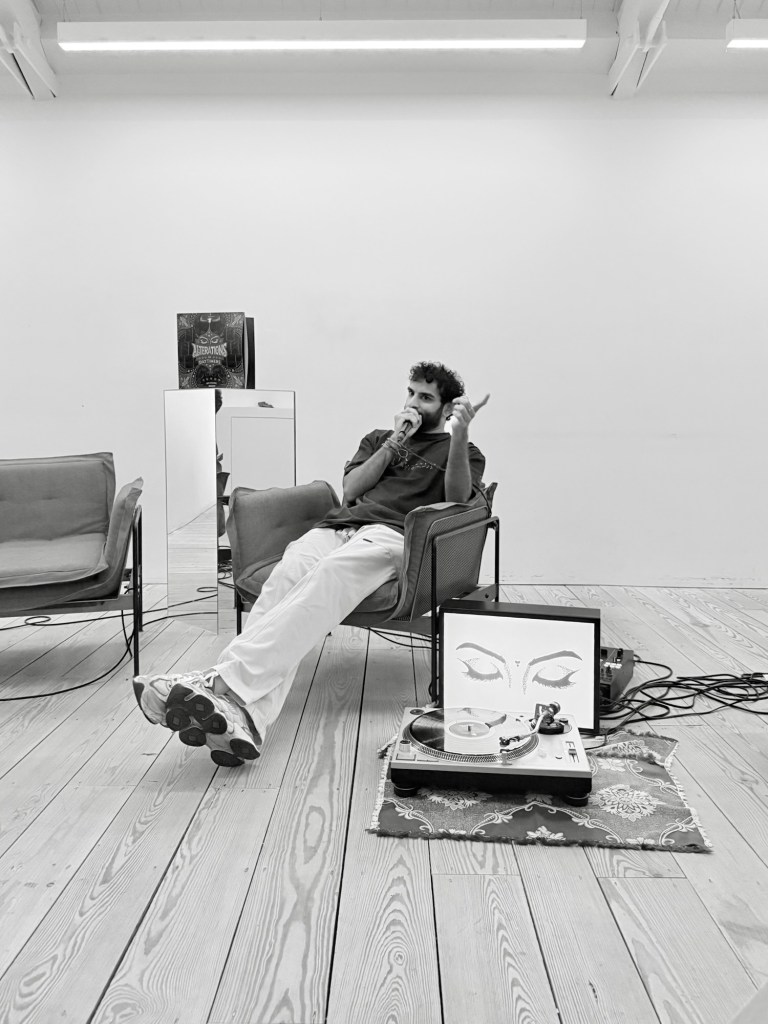
At an intimate vinyl listening session in North London, two days before the album release, DJ and Radio Presenter D-Lish prefaced this next remix by describing it as “a bit much”. We all laughed confusingly at her remark before she pressed play on the record player. The warm crackles of the vinyl spat out of the large speakers and then came out an outlandish, daring Drill remix of a Kuch Kuch Hota Hai classic by yourboykiran—LADKI BADI ANJANI HAI. People proceeded to lose their minds in the room. It starts off with the atmospheric beginnings of a dirty dubstep track like Chase and Status’ “Eastern Jam” or anything from Nasha Records circa 2009. You’re then blown away with a hard-hitting Hip-Hop beat with a wobbly bass that I don’t think Kumar Sanu ever imagined his voice would be cleared for one day. Before you know it, you’re on the floor with a bally, doing the Gun Lean and the Sturdy. The next verse comes on and all of a sudden, you’re Kajol in a pink shiffon saree, in the middle of a kid’s summer camp, singing to Shah Rukh Khan for the first time since your college days. To summarise in three words? It goes hard. This might just be one of those secret weapons DJs hide away in their SanDisk USBs to shut a party down with.

When superstar DJ and BBC Asian Network presenter Manara first heard the final song on this album—Raji Rags and Vindya’s remix of Arijit Singh and Shreya Ghoshal’s PAL—at the Firmly Rooted Sound System and Azaadi stages of Glastonbury, she lost her mind. She danced side-by-side with DJ UMMI, going wild over Raj’s incredible set at Azaadi when he dropped this remix. Lives were changed that night. These London-based producers transformed this soothing love song into a reimagined darker sounding breakbeat track, with a smooth bass line and glitchy drums that make me feel like I’m running through a Tron movie soundtracked by the DAYTIMERS. Little was done to alter the vocals of two of Bollywood’s biggest playback singers. Instead, Rags and Vindya focus on building a spacey, ethereal violin arrangement to score the sample with and fill it with fractured electronic clicks and effects, to perfectly encapsulate what it feels like to be in a trance at a Asian underground night.
In many ways, Alterations doesn’t just remix songs, and these producers aren’t simply sampling sounds to honour their heritage; they’re bending and recontextualising them in the language of underground club music that shaped them growing up in the Western world. What emerges is a body of work that is joyously diasporic and defiantly hybrid. It is as much of a celebration of one’s identity as it is a refusal to be pigeonholed by it. There were moments where I wanted the album to be longer or go deeper in its sound, but that urge and excitement around the music invites me to dig deeper and research the scene. To find the edits, mixes, radio shows and club nights where I can discover more of what I loved about this album. It’s an excellent musical starting point to introduce today’s young people to the concept of what it means for them to be South Asian outside of South Asia.
In the wider lexicon of British South Asian music, this album lands as a visceral, landmark moment. If Talvin Singh’s Anokha was the manifesto for the first wave of the Asian Underground, Alterations is its well-deserved continuation. It speaks to a new generation of British South Asian creatives, raised equally on daytime Bollywood cassettes, LimeWire crate digging, and nighttime pirate radio. As a DAYTIMERS release, it solidifies what the group have already built: a grassroots movement reclaiming space in UK nightlife but more than that, it paints a picture for what’s next. For future ravers and artists alike, Alterations is both a nod to what came before and an invitation to go further.
ALTERATIONS is now available to buy and stream everywhere.
 JAY DAHYA