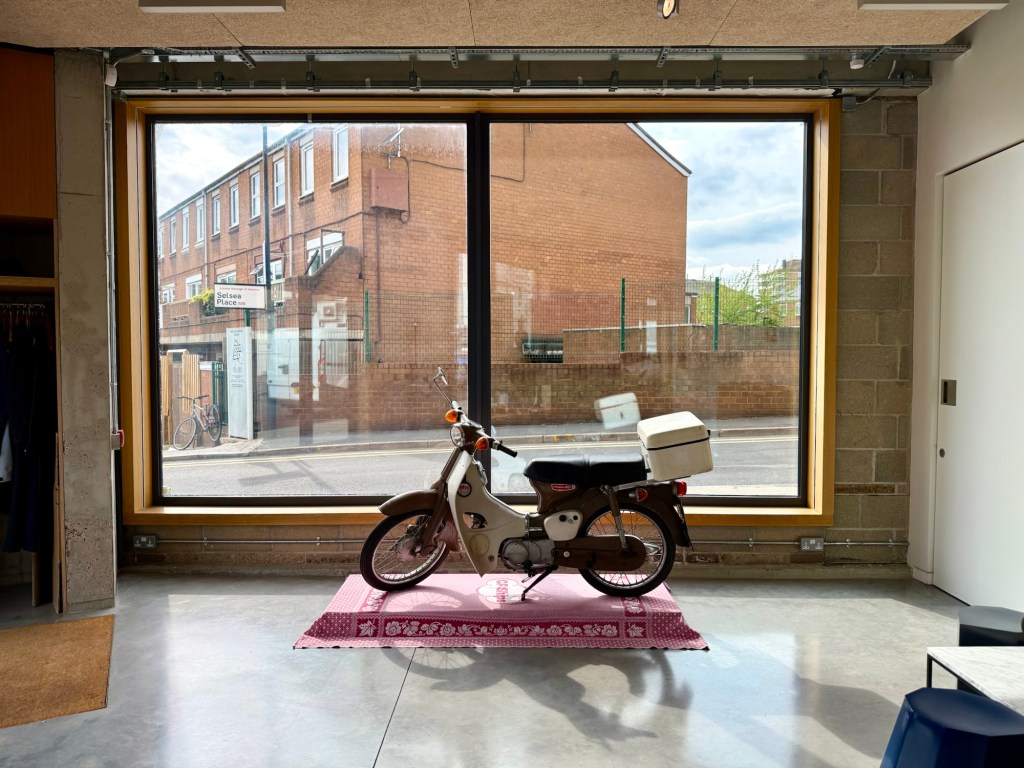
A short while ago, I found myself stepping out of Dalston Kingsland Station, wondering aimlessly, when a photograph in the window of the 1014 Gallery stopped me in my tracks. An elderly Gujarati woman stood in an open meadow, her milky hair framing a face lined with wisdom, hands drawn close to her chest. She was draped in a large, sculptural garment made of foam strips, cascading around her like an oversized, abstract dress. The longer I looked, the more it unravelled in my mind. I’d rarely seen imagery like this: the contrast between the organic setting and the synthetic material. The matriarch, caught in a moment of deep reflection. The mere image of someone who could look like my grandmother as a focal point in high art. It was visually poetic and theatrical, melding tradition with the shifting contours of identity.
Inside, the first image to greet me was of two men wrestling on a sunlit green field. One wore a vivid red sherwani, caught mid-lift and unguarded, while the other—dressed for sport—tackles with sinewed focus but his face reads shrouded with emotional guilt. It was intimate and explosive all at once, a living metaphor for what it means to hold onto tradition while fighting to define your own way forward. This was my introduction to Vivek Vadoliya’s “& When The Seeds Fell.”

I’ve known of Vadoliya’s work for some time—through his striking portraits for Vogue India, British GQ, and Mr Porter x Stone Island—but this was something else entirely. The first thing that struck me was how personal it all felt. On the wall was text from Vadoliya explaining how this body of work began when his mother fell ill. Thankfully, she’s recovered from her illnesses now, but photography became his way of not just documenting but connecting with his family because of it—a way of sitting with vulnerability, love, and change.
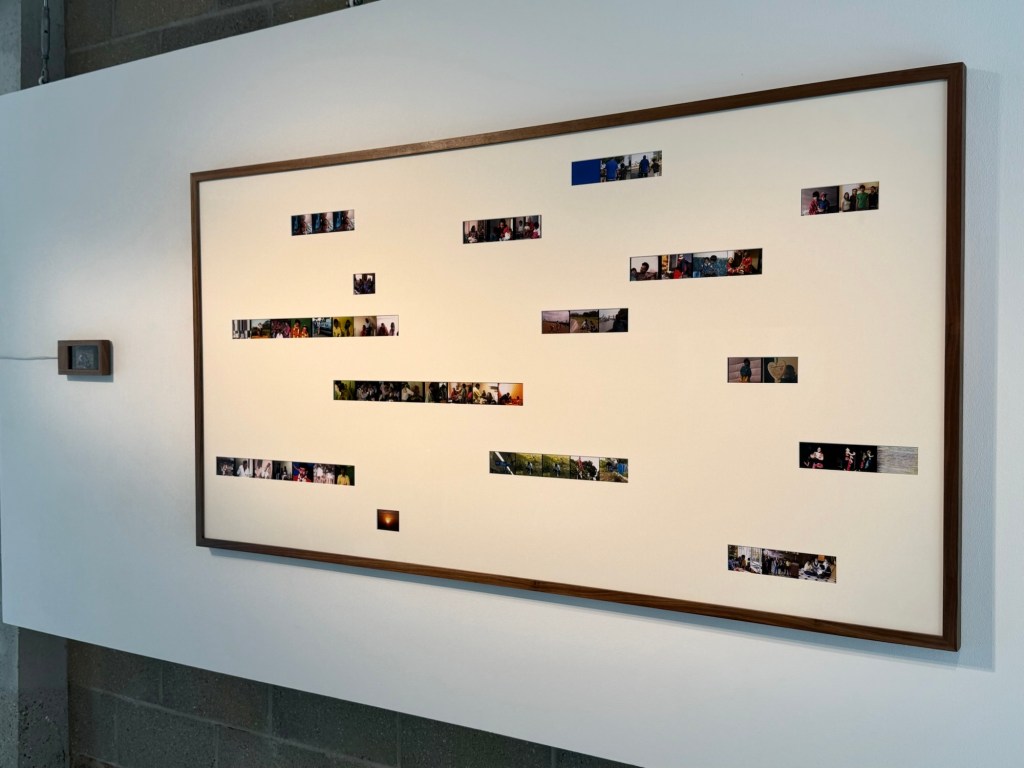
Half the works are presented as diptychs—two images speaking to one another across space, time, and memory. This format mirrors the exhibition’s central theme of living between worlds. The pairings create a visual dialogue that reflects the duality of life: tradition and selfhood, India and the UK. And it’s not just photographs. An old iPhone plays home recordings from London and Gujarat on the ‘Tapestry of Tapes’ (pictured above): crossing the street with his father, laughter over a kitchen table, trips to cobblestoned beaches and the kesar orange glow of an Indian sunset. Ordinary moments that most of us never think of as “art.” And yet, standing there, I realised we are art. Our rituals, our clutter, our everyday gestures—they’re all worthy of seeing, worthy of remembering. It’s incredible to think how our parents knew to record us simply being; that was enough to capture the essence of our culture, our traditions, our lives.
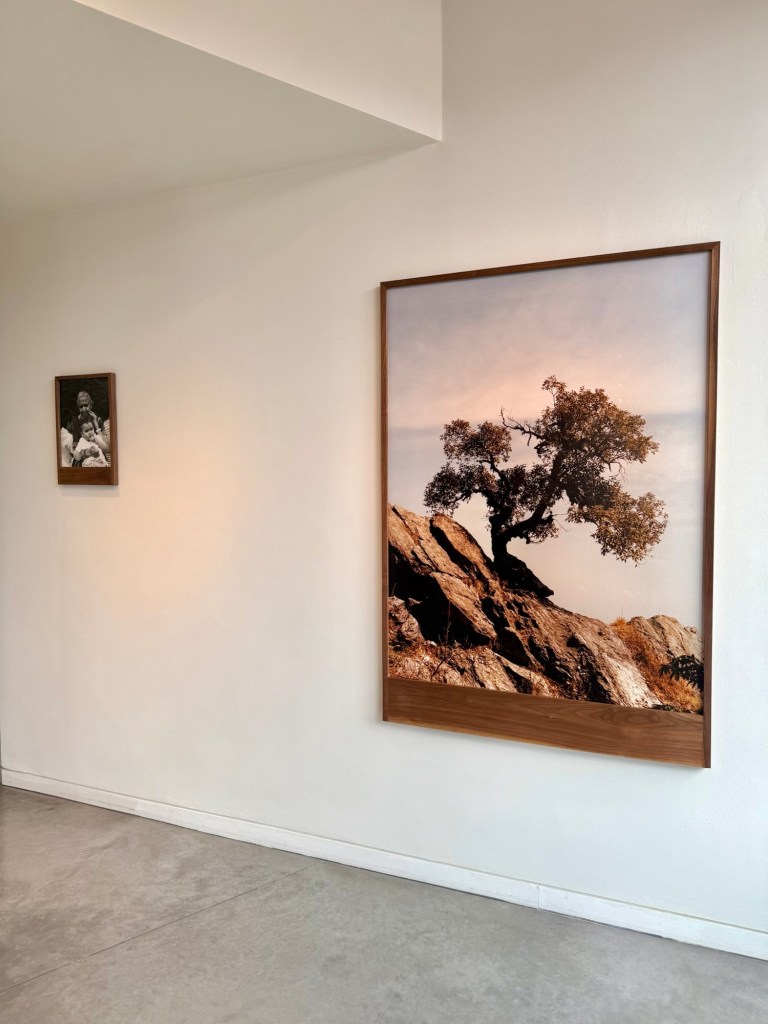
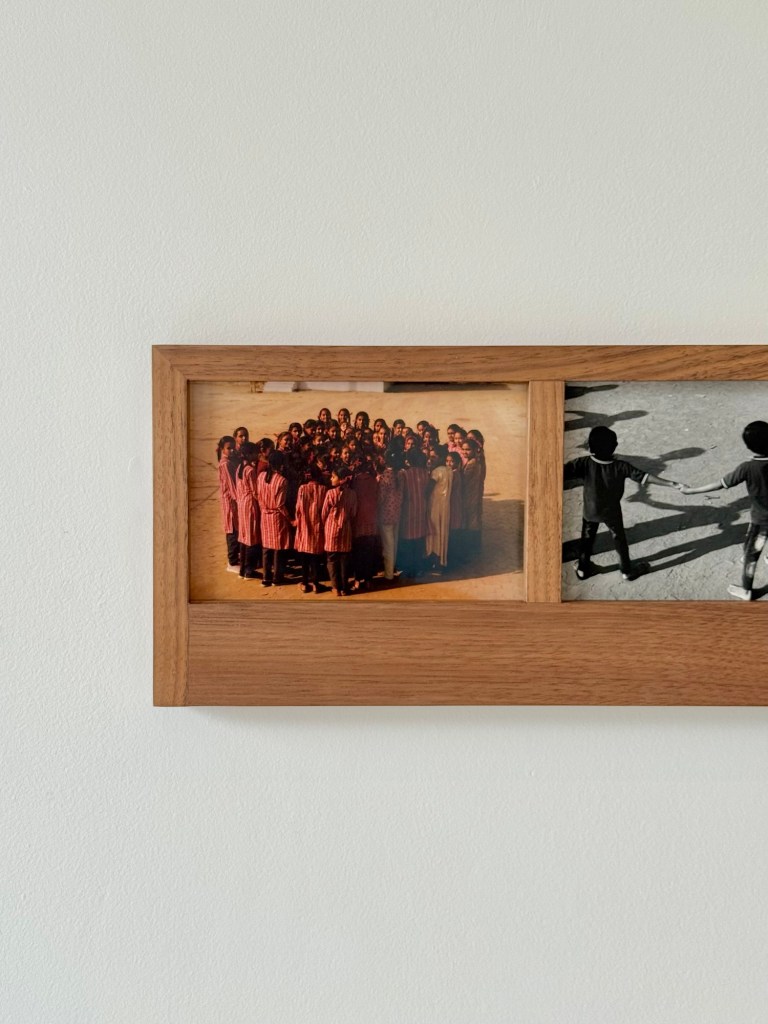
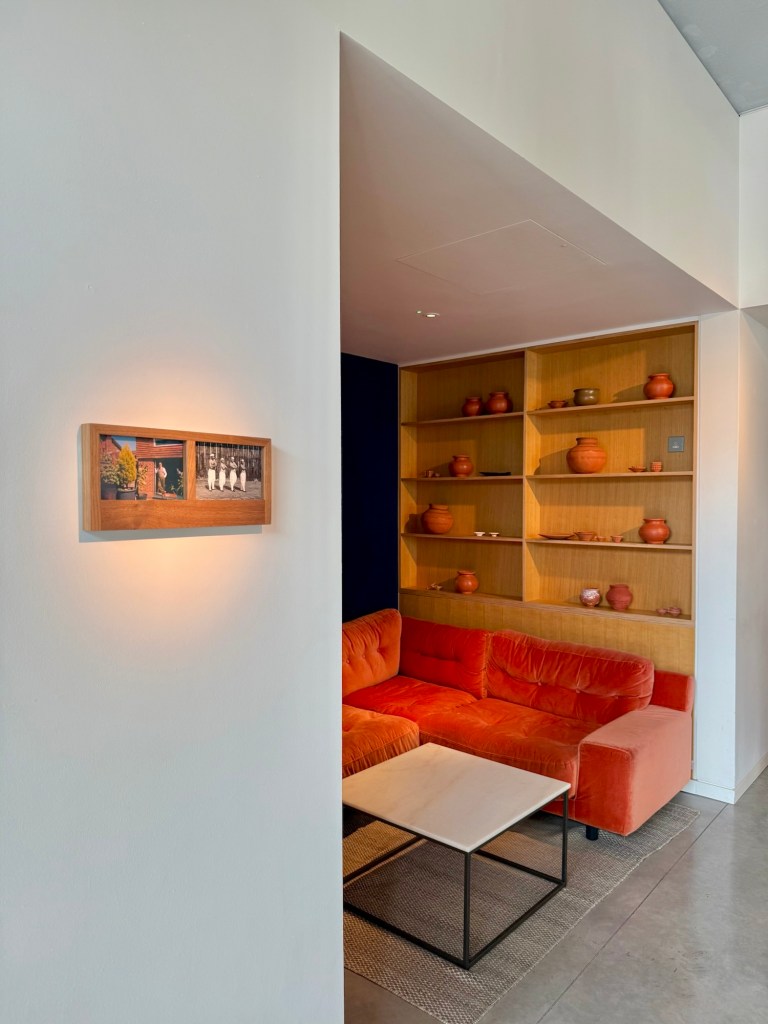
This year’s South Asian Heritage Month theme, “Roots to Routes”, runs like a current through the show. The roots are everywhere here: in reworked family portraits, in archival video footage, in the textures of British Gujarati culture that seep through every image. The routes are just as present: in the way these images travel between continents, in the way memory is edited and collaged back together, in the fact that Vadoliya is carving his own path through the traditions he’s inherited. I loved how he didn’t try to give us a neatly packaged “home.” Instead, he showed his home as something that constantly shifts—sometimes tender and tense but always layered.
Walking out of the gallery, I kept thinking about the title: “When the Seeds Fell.” Seeds fall in one place, yes, but the roots they grow can stretch far, twisting into shapes we can’t predict. Maybe that’s the heart of Vadoliya’s work, showing us that we carry our heritage in motion. We take all the contexts of our ancestral history and shape our futures with those blessings. That even as we move, we’re still tethered to where we began but we get to decide how to grow from there.
See more of Vivek Vadoliya’s exhibition here
 JAY DAHYA