
Hanumankind & Kalmi’s Big Dawgs blew up in a mostly unexpected way this summer; outside of it being a very well-produced song, it topped global Hip-Hop charts (dethroning Kendrick Lamar’s Not Like Us for a hot second), became a massive hit across US radio and put a huge spotlight on Indian Hip-Hop, forcing music executives around the world to follow in the footsteps of the global Dance scene and look towards the South Asian diaspora for the next big sound to take over the world. Pakistan, much like India, has always been associated with traditional, classical, pop and film music but a new generation of artists are finding Hip-Hop to be the perfect avenue to express their creativity. Gone are the heydays of orchestral bands and operatic voices of Bollywood and Lollywood. The swaggy, rebellious nature of Hip-Hop defies the notions of political conservatism that have filtered their way through the post-independent identities of so many South Asian countries.
Historically, the film music that would once come from these countries helped showcase an ideal of travel, fashion and romance that working and middle-class consumers could strive towards. However, in the search for audiences to find music that relates to their real-life experiences, rap music provides a united platform and a more liberating sound, comparable to the feeling of hearing boom-bap Hip-Hop in New York circa 1994. The gritty music found in the streets of Karachi lends itself perfectly to the incredibly diverse musical landscape of South Asia today. Hip-hop label Mass Appeal recognise this “dynamic and evolving scene” and in its efforts to continue the amplification of South Asian voices and “cement its presence as the global home for hip hop”, expands its reach to Pakistan, as they partner with some of the country’s finest exports: Blal Bloch, Maanu, JANI, Umair and Talha Anjum.
A mere four days after this announcement, Anjum—one of two Talhas in the established Pakistani rap duo Young Stunnas—finds himself in London to promote his then-upcoming project. Mass Appeal had organised a free-to-attend event for his hardcore fans in one of the city’s most iconic music venues, KOKO. As I arrive, it very quickly dawns on me that when I last ventured to this corner of the city, I’d visited to drink and whine away to the sounds of Dancehall, UKG, Amapiano, Disco and House. That night, I saw Pakistani university students, British-born hijabis and long-bearded uncles come out to a venue that they would never otherwise visit, to see an artist they would never otherwise experience in as grand of a space, as they discovered what a cloakroom was for the first time. It was clear that something special was happening as the night unfolded.
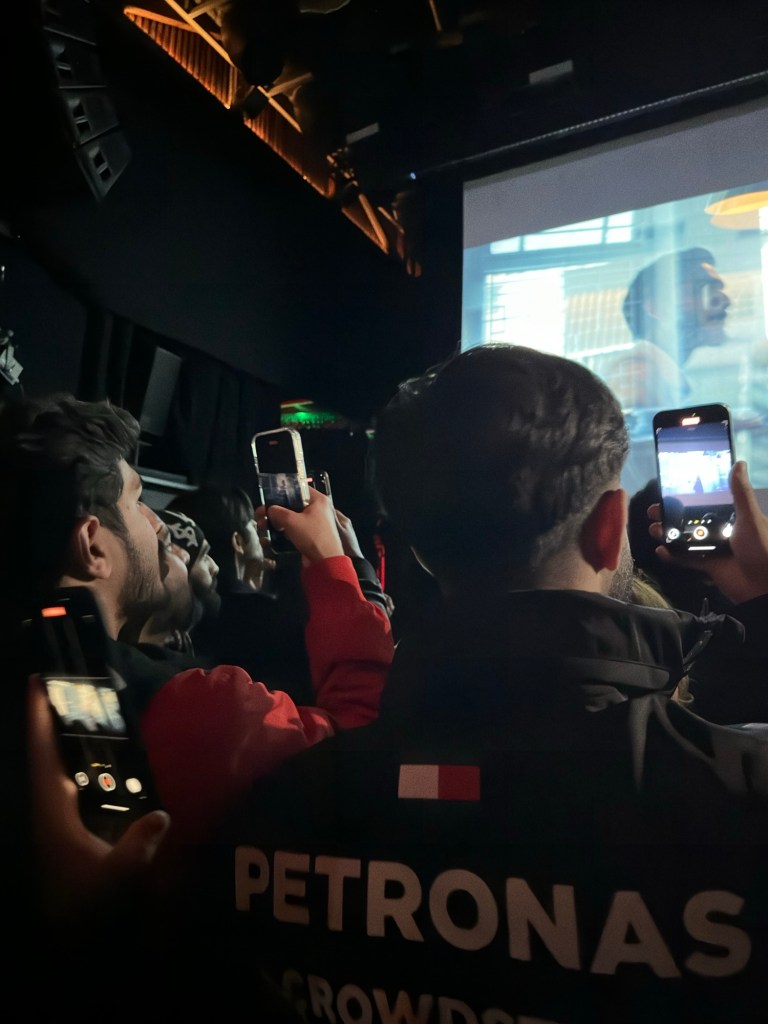
Anjum, dressed to the nines, arrives onstage to premiere the film accompaniment to his brand new album, ‘My Terrible Mind’ and, with the widest smile, expresses his gratitude to the sea of fans gathered and the Mass Appeal team for “making this dream come true”. He exits stage left to join label co-founder and Hip-Hop legend Nas in watching this 37-minute film about a scrappy young guy, living in the favelas of Karachi, who envisions a life much larger than the one he lives. Under threat of his neighbourhood being flattened by the mafia to build new housing, he sets himself on a mission to fight back against the powers that be, all while being betrayed by a newfound love. His album adds depth to this story as it beautifully interweaves through the situations his character finds himself in. Watching that in a crowd of his ride or dies was like watching Bollywood’s Shahrukh Khan come on screen in an Indian cinema hall. Bar from fireworks being set off, the crowd stayed hollering after Anjum delivered one-liners on par with Desi feature films.
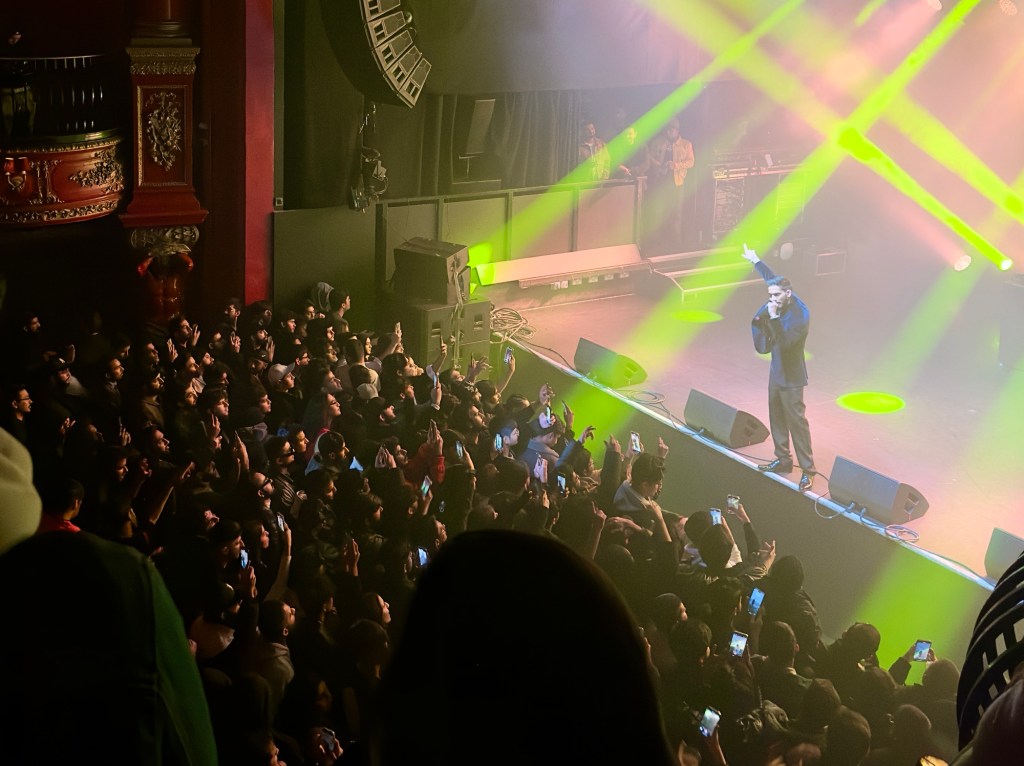
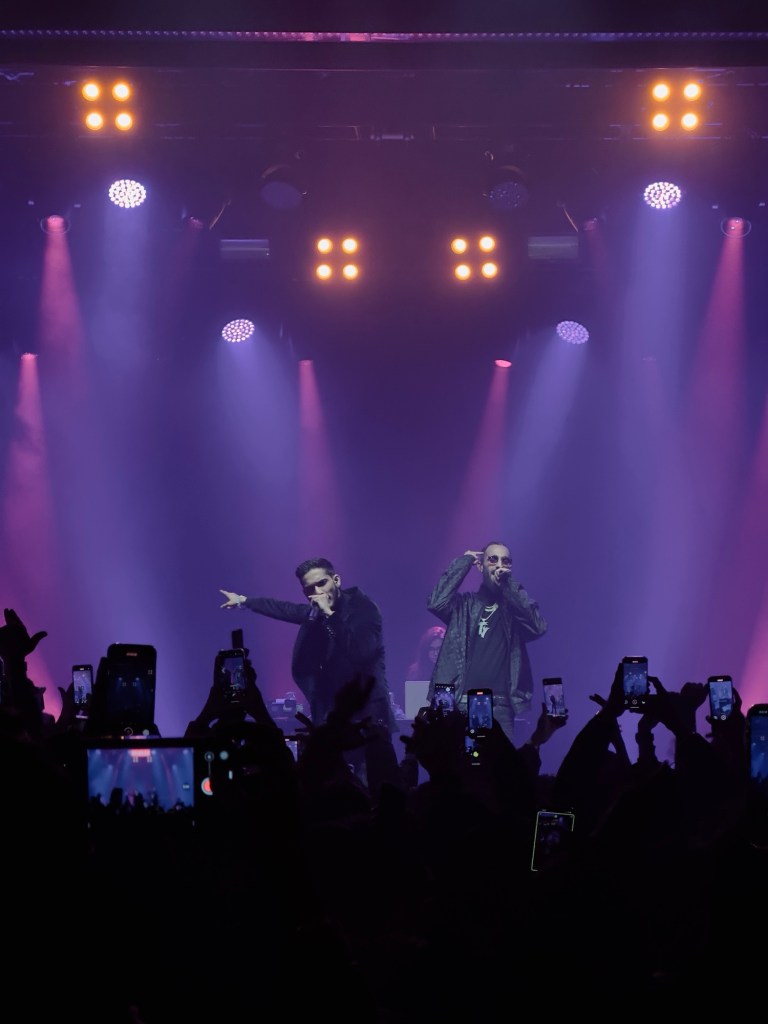
Anjum then comes out to perform some of those very songs that played throughout the film. His stage presence was infectious and the crowd loved him. In a world where artists either lip sync or sing over their records, what set him apart for me was that he was rapping to his instrumentals. Every bar he rapped, every breath he took, every little laugh he made, was all captured on his mic. Meeting him backstage, he tells me he feels he owes his fans at least as much. As big of a star as he felt that night, there’s still a humbling quality about him when you speak to him one-on-one. His brother-in-music, Talha Yunus (the other half of Young Stunnas) came out to perform a full set list of music with him to a screaming crowd of stans and had the place jumping. The air was electric, I’d never seen anything like it. For an underground Pakistani hip-hop artist to have a packed-out KOKO audience rapping his songs, bar for bar, all while being backed by a label that believes in him and his art, so much so that they created a short film based on his latest body of work is unprecedented. I felt like I was present for the start of something new.


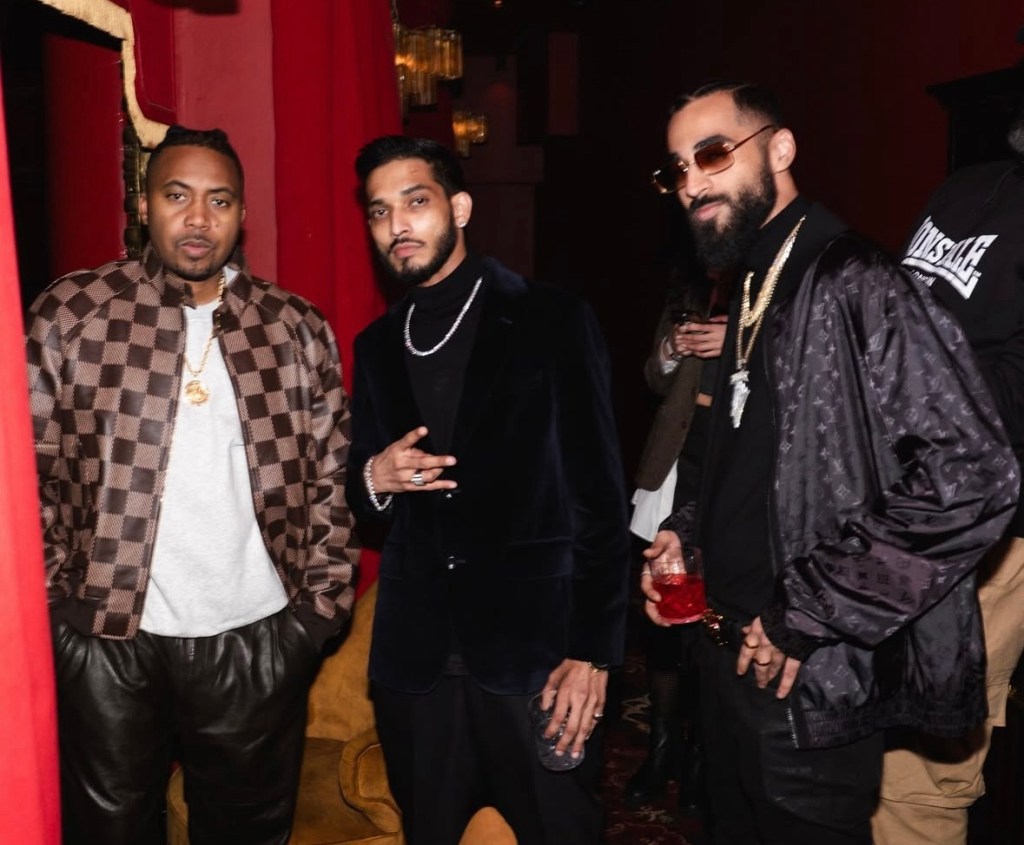
As 2024 comes to a close, 10 days after the launch of his new double album, Talha Anjum is crowned Pakistan’s most streamed artist on Spotify, putting him in the company of some of the country’s giants: Atif Aslam and Nusrat Fateh Ali Khan. It may not be long until we start seeing these names and faces on more and more global stages. The South Asian sound, especially in the context of rap and hip-hop, often blends traditional musical elements and a medley of languages with contemporary, western beats, making the subcontinent a treasure trove of fusion music. With artists like Sidhu Moose Wala, Karan Aujla, DIVINE, Raja Kumari and Raf-Saperra having already made their stamps in this scene, we could see more brown rappers breaking into mainstream Western markets. With the backing of someone as huge as Nas and a bar-heavy album that taps into so many sounds, who knows? We may be witnessing the rise of a global rap star.
Talha Anjum’s ‘My Terrible Mind’ is available to buy and stream everywhere on digital platforms.
 JAY DAHYA
Leave a comment