It’s Friday afternoon and we’re t-minus nine hours from the event. I walk down the stairs to my front door, checking to make sure I have my keys in my pocket and my mum asks where I’m going. I reply nonchalantly, “To buy a kurta”. I hear the rustle of her rushing out of bed to check that she’d heard correctly. She invited herself along to make sure I was being guided properly through the nature of shopping at an Indian fashion store but I told her to stay home; I needed to do this for myself. While I walk past these shops every day, it’s been nine long years since I’ve been in any type of Indian attire and so, I’ve had no need to visit these shops ever since. As soon as the automatic door slides open for me, I’m hit with a smell that I can’t quite categorise but that can only described to the diaspora as ‘home’. This shop hadn’t changed an iota since I’d last stepped foot inside: the beige panel walls, the scratched glass and gold-rimmed counters and the stacks and stacks of embroidered and silk fabrics. Every kurta I tried on, while marked to be the same size, all fit differently. Standard. I knew straight away when I found the right one. My posture straightened while I looked at myself in the mirror; I felt a sense of self float back to me.
I’ve only ever found myself wearing Desi clothes at a wedding or during a religious festival when I was younger. Over the years, I attended those same functions in Western attire and looked funnily at others wearing traditional clothing so freely on the street. I guess this is why it was so important for Sukhchain Singh Sohal to cultivate an environment where you could feel free to embrace this traditional side of yourself. The absolute first thing you see in the ticket description of any Jawani 4eva event are the words, ‘Bun the assimilation’: a striking contrast to any other Desi ‘club night’ out there but that’s exactly the point. This isn’t, and never has been, a ‘Punjabi club night’. The dress code is Punjabi but it’s more than just what we wear, it’s about how we wear it.
My first ‘Punjabi night’ was during my first year of university in Birmingham, back in 2017. While PRYZM Tuesdays were widely known as the cheap student drinks night to go to, a small group of brown kids knew that in that nightclub’s smallest and darkest room, you could open the door and see a packed room of South Asian students scream-singing Tru-Skool’s ‘Puth Jattan De’. Since then, we’ve had some milestone moments in the culture that have involved DJs bringing their skills of mixing Punjabi folk with House, Grime and British electronic styles of music. To replicate that level of impact, you saw more local events pop up in the Midlands and across London, that cited the likes of Boiler Room Southall as inspiration for their events but rarely did you see DJs mix these genres so authentically.
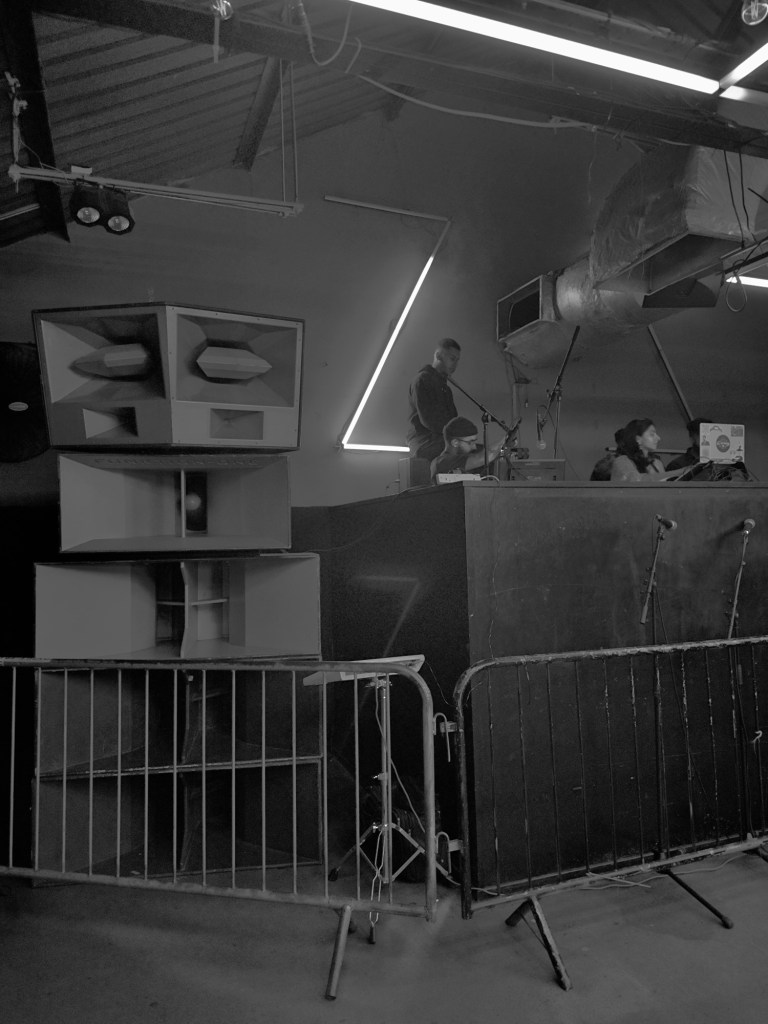
The special thing about doing something with a purpose is that it hits differently when you’re in the thick of it. Your experience becomes more meaningful when you know there’s a cultural agenda included in the price of your ticket. Sohal has done an incredible job these past two years of curating nights to flaunt a particular punjabiyat that both he and the community he’s built have grown up with. He takes you on a journey to explore the rich tapestry of Punjabi music through his incredible lineup of artists who respect the music, starting with DJ Kiran. Almost a year after purchasing her first set of decks, she’s found herself on the Jawani lineup for the second time. Much like her first time, when she performed at the Colour Factory for their London event in June of this year, Kiran begins her set paying homage to the Reggae and Dub sounds that the Windrush generation brought along to the UK in the 1960s, that British-Punjabi music would find itself being inspired by in the 1990s. Straight out the gate, you hear Kuldip Manak and Harjit Harman being mixed with Quantic’s ‘Spark It’ while ordering drinks at the bar. As more partygoers entered, she bumped up the BPM and switched the vibe to UKG, as she passed the baton over to Birmingham-based producer, engineer and DJ, Manj.

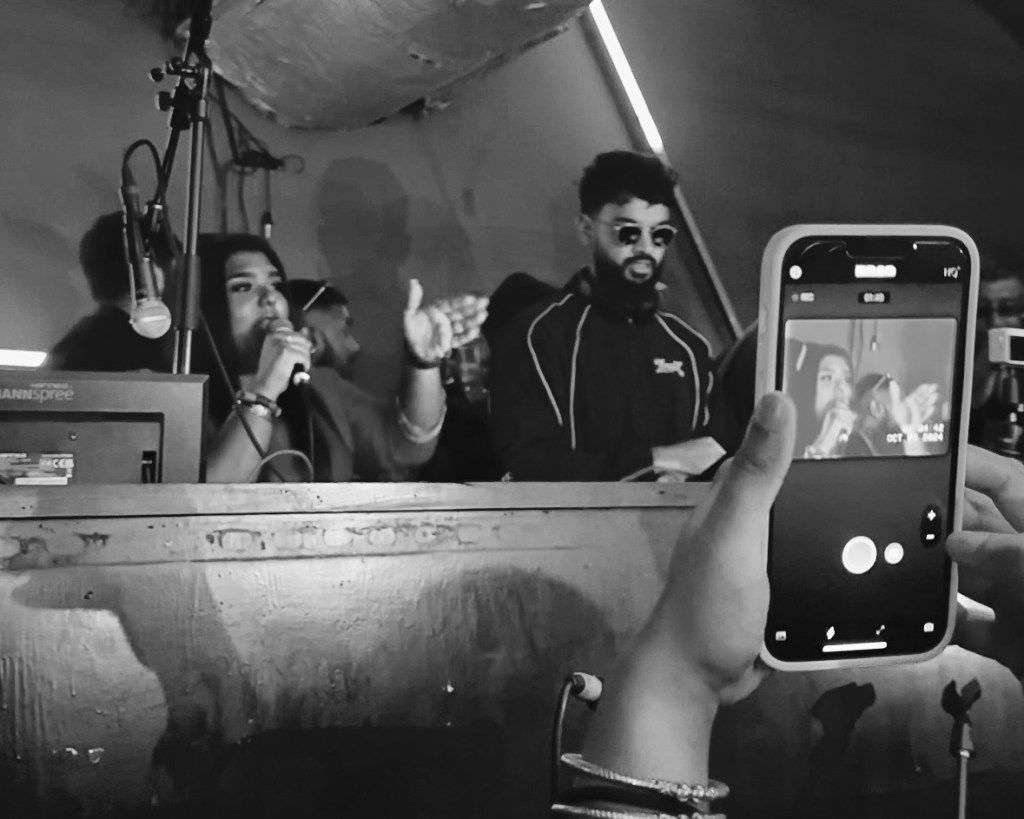
Manj has always played wubby sets; you can catch him rocking crowds at events for DAYTIMERS, Queen’s Yard Summer Party or even at his own PNGA nights but this Birmingham crowd weren’t having it yet. People were still feeling awkward to dance but he would eventually find his cheat code: start playing Sidhu and Surjit and the crowd starts two-stepping and singing a few lines. Throw in an unruly UKG remix of JME’s ‘That’s Not Me’ and Champion’s ‘International Man’ and that brown Brummie crowd came alive. As Manj starts to cook, Meera Tura grabs the mic to turn the heat up to 100. While Meera—another Birmingham local—may be a recent Chemical Engineering graduate, make no mistake that she’s a singer and a creative to her core. We’ve seen her sing original bolis and old-school Panjabi songs with Yung Singh and other Jawani DJs before but what keeps people loving her is that she does it with such a natural swag. Both her deep voice and the live bugchu playing in the background rang loud and clear. It echoed across the room as her family watched her dedicate a few lines from Kuldip Manak’s ‘Maa Hunda Ae Maa’ to her mother and bhua-ji in the crowd. Manj and Meera continued to mix live vocals with Hip-Hop instrumentals and the crowd stayed hyped as she ended with her ‘Midlands Boli’ and handed it back to Manj to finish his set.

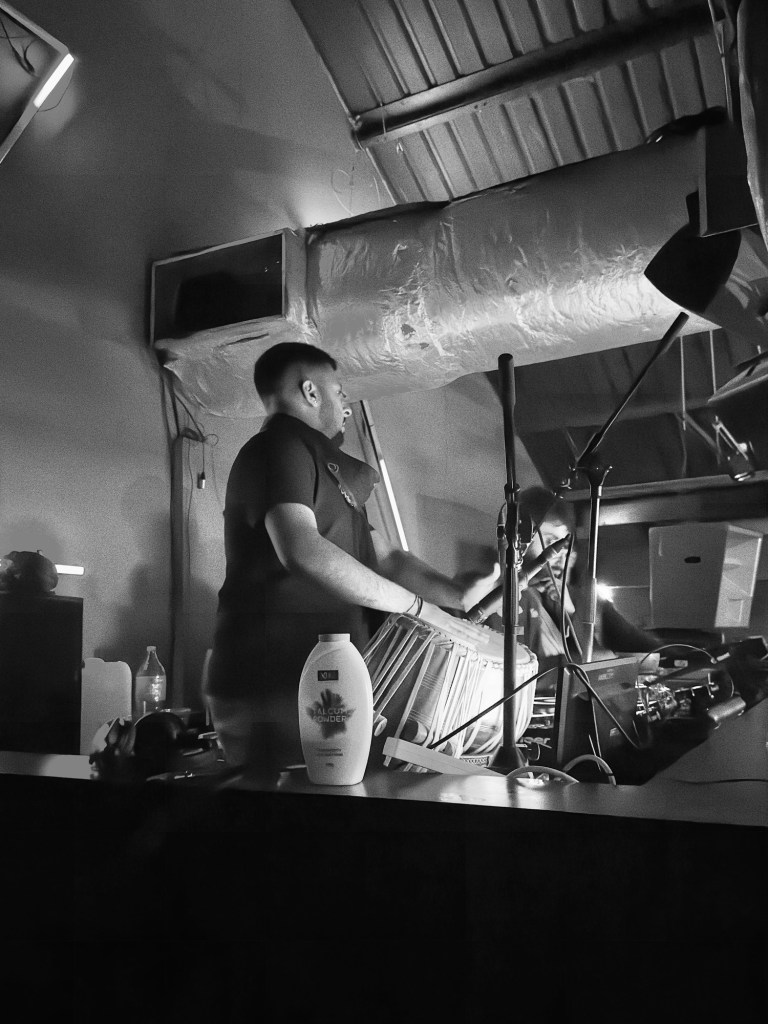
On comes producer Amritpal Singh Kullar to introduce Junglebandi—a live trio made up of himself on the decks, dholi Vishal Chamba and instrumentalist Vishal Mahay on tabla. It became immediately clear why vocalists the likes of Raf-Saperra and Malkit Singh call on them to play the percussions and the vaja for them. If you strip it back, Kullar on the decks alone was worth being on that lineup. He seamlessly blended electronic sounds with vocals from TLC’s ‘No Scrubs’, Ustad Nusrat Fateh Ali Khan’s ‘Tumhe Dillagi Bhool’ and straight-up, “Bund parh” old-school Punjabi folk tracks like Chamkila & Amarjyot’s ‘Pehle Lalkara Naal Main Dar Gai’ and DCS’s ‘Tenu Kaul Ke’. Add in the live drums and you get a fast-paced, back-and-forth battle of Indian classical beats on songs like JAEL’s ‘Nancy Junglist’ and Chaka Demus & Pliers’ ‘Murder She Wrote’. Insane work. Unexpectedly, he brought out Bakshi Billa—a Punjabi vocal veteran—to sing a few lines from his 2012 hit song ‘Sona’, produced by Manni Sandhu.

Kullar then brings to the spotlight, Steven Sahota and his live band for the penultimate segment of the night: you had Sahota on vocals, tumbi and harmonium, Runveer Singh on algozay, Tubsy Dholkiwala on dholki, TJ Bansal on dholi duty and Raveen Kumar on the octopad. They arrive at the front of the stage and begin a minute-long mic check. He thanked us for waiting, assuring us that we were in for something special. Birmingham being the birthplace of UK Bhangra, the Midlands crowd will always be partial to a live folk-inspired performance. How did I know they’d be legit before they started playing? Aside from the fact that Tubsy has played dholki for damn near every living legend in the game in his 50 years on this Earth, Sahota, wearing a T-shirt of the artwork to ‘Manak and Party in England’ with the acronym G.O.A.T. written across his chest, dedicated his 20-minute set to ‘keeping the culture alive’ and began singing Kuldip Manak’s ‘Sahiban Bani Bharawan Di’. The crowd went crazy. One attendee felt so strongly as to take a bluey out of his wallet, circle it around Billa Bakshi’s head and place it on the vaja during his impromptu freestyle with the band.
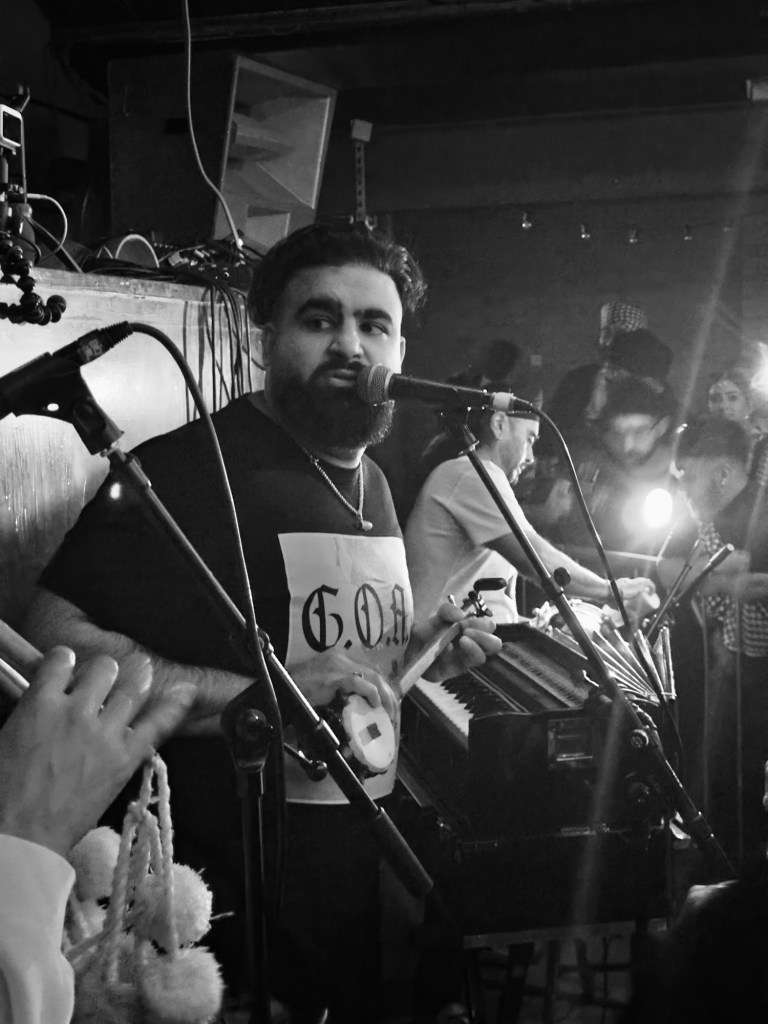
There are sounds and behaviours that you grow up with in these households that are so engrained into the fibre of your being that it would be hard for you to stand idly by, listening to live renditions of songs your family own on vinyl and my God, did Sahota’s band remind us just how deep this thing goes for so many. These aren’t just songs, it’s not just a club night and it’s not a costume party, this is culture—live and direct. These poems of love and life, written and sung in the Panjabi mother tongue, have been passed down now for generations. That’s probably why you could see Sohal putting his hand on his head, visibly blown away, as he watched a crowd of mostly young adults go wild for Sahota singing Surinder Shinda’s ‘Dhola Ve Dhola’.
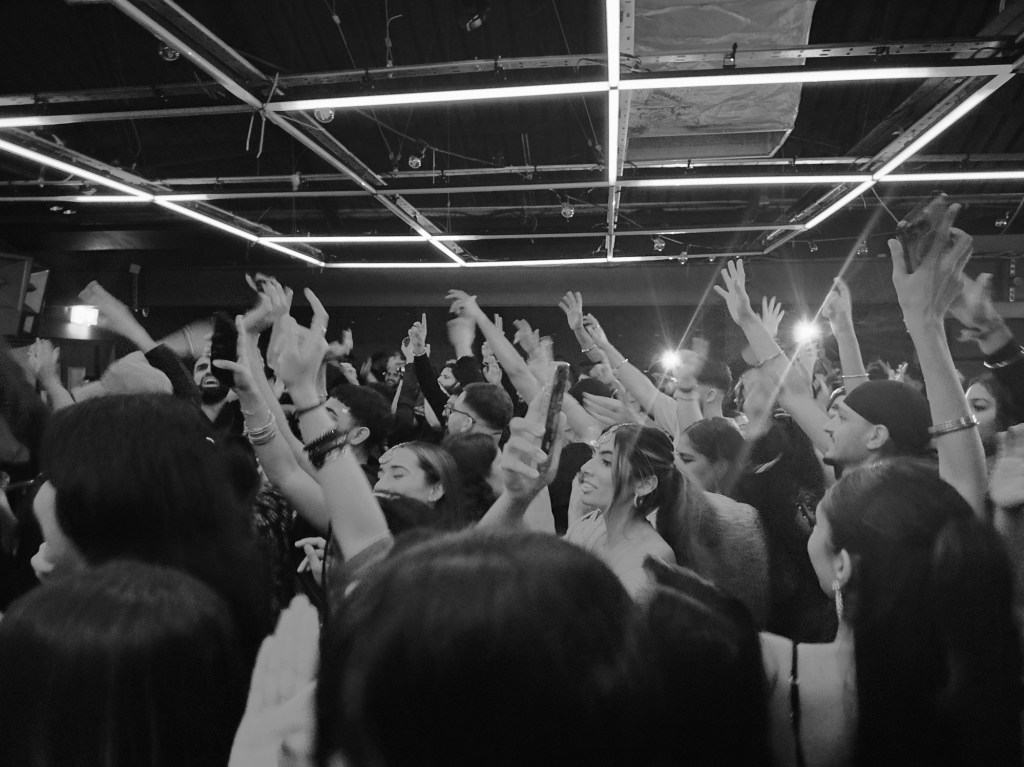
Finally, Arjun Bhambra—known simply as ARJXN—steps up to the plate to close out the night. He describes himself as a “semi-professional button masher” on his Bandcamp page but from what we experienced that night, he sells himself short. Arjxn seems to be a popular choice for Jawani nights, among many others on the lineup for this event and it’s for good reason: he is guaranteed to shut the place down, just like he did for Jawani’s iconic Fabric takeover at Yung Singh’s EKTA Launch event earlier this year. His sets can only be described as riotous and energetic. He constantly surprises his audiences with original blends and remixes, one of which was released on Bandcamp as the first track of Jawani 4eva’s mixtape: it features familiar names that have played key parts in creating the Jawani brand like Rozart, Bal-T & MC Rax and Ramnaissance and is available to purchase as physical media on their website.

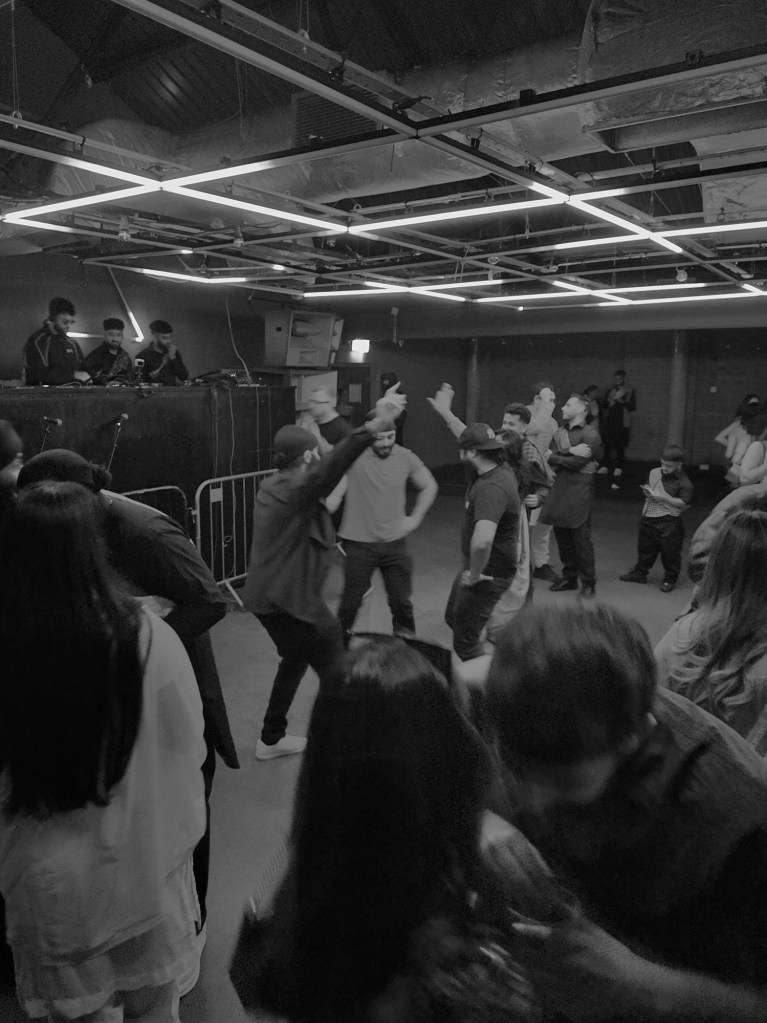
At one point, nobody had their phones out. We were just dancing. Self-consciousness left the building and we all let loose. You saw friends putting their arms around each other and jumping and white guys being taught how to do Giddha, all while little bubbles floated above you from the Jawani team’s signature handheld blaster. That didn’t mean people weren’t taking photos though; you could see the intermittent flashes of disposable cameras in the crowd as well as photographer Yushy being told “one more” so that people could straighten out their moustaches. When Arjxn announced his last song of the night, there were screams for an encore. Sohal skipped onstage as the house lights came on and threw finger guns into the crowd for another two songs before we got told to leave through the fire exit.
In a world where your identity is blanketed as being South Asian, without regard for regional recognition, Jawani 4eva provides a space to intentionally restore Punjabi pride and prestige in its people around the world. Only at this kind of event will you see women in cotton-printed salwar suits and phulkari bagh dupattas, comfortably performing giddha with the girls to a blend of Onderkoffer’s Amapiano remix of Kendrick Lamar’s ‘Not Like Us’ and ‘Johal Boliyan’. Only on this type of dancefloor would you see young Punjabi men in patkas, parnas and pagris bust out their award-winning moves, from their university Bhangra groups, in full taur may I add, to Sukh Knight’s mashup of ‘Kacheh Tandan’ and ‘Overnight Celebrity’. Growing up Gujarati in the middle of Leicester’s Little India, as much as I was surrounded by my heritage, all I absorbed was Punjabi music. I vividly remember my uncle introducing my cousin and me to RDB & Sahara the afternoon after coming home from a night out. I remember the chokehold that JK & Tru-Skool’s ‘Gabru Panjab Dha’ had on me when it dropped in 2011. I can even recollect performing to DJ Rags & DJ H’s ‘Jawani’ as a 9-year-old for my primary school’s Vaisakhi play. Punjabi music is so interweaved into the fabric of the British South Asian identity, that it’s easy to forget that this isn’t a gimmick. There’s a tradition and a heritage behind this music that you cannot untether and that you have to respect.


As far as the dress code went, people pulled through and said ‘Bun the assimilation’: I saw scarves with Gurmukhi letters—that Sohal designs for his fashion-forward label lahoS—across slim-fitting black kurtas and bucket hats and bum bags slinked across shoulders on white tees. You still saw the odd Zara puffer coat, Canada Goose vest and Trapstar hoody on the dance floor but you saw black and white friends wearing gold khaintas and sporting impressively long plaits to balance them out. I came back home, looked in the mirror and thought to myself, “I look good in a kurta, you know”. It’s about time we wear this fabric on our sleeves more often.
If you’re lucky enough to have a Jawani event come to a city near you, grab a friend or two and make your way down. You won’t regret it.
Follow the brand page on Instagram (@jawani4eva), listen to their mixtape on Bandcamp and visit their website here to shop their collection.
 JAY DAHYA
Leave a comment